2026 Top Lead Cable Types for Global Buyers
Global buyers rarely need one universal cable. They need the right lead cable for a defined environment, voltage, and service life. This guide introduces the leading cable types considered in 2026, from lead-sheathed power cables to lead-covered control cables and specialized lead wire assemblies.
William A. Thue, a recognized cable-engineering author, offers a useful principle: “Cable selection must begin with the application, not the catalog.” That advice remains practical. A mining project may require a tough metallic sheath, while a laboratory installation may prioritize shielding and chemical resistance. A marine buyer will examine moisture sealing, termination quality, and corrosion behavior. Weight matters too. Lead adds protection, but it also increases handling demands and installation cost.
This overview compares conductor materials, insulation systems, sheath designs, flexibility, and documented performance. It also considers regional compliance, restricted-substance requirements, recycling obligations, and supplier traceability. Buyers should request test reports, material declarations, batch records, and clear operating limits. A low quotation can hide expensive termination work. It can also reflect an incomplete specification.
No ranking is universal. That is the uncomfortable part. A cable that performs reliably underground may become impractical in a compact control cabinet. Some product descriptions remain vague, especially across international markets. Therefore, every lead cable choice should be checked against the project drawing, installation method, climate, and applicable standards. This introduction provides direction, not a substitute for engineering review.
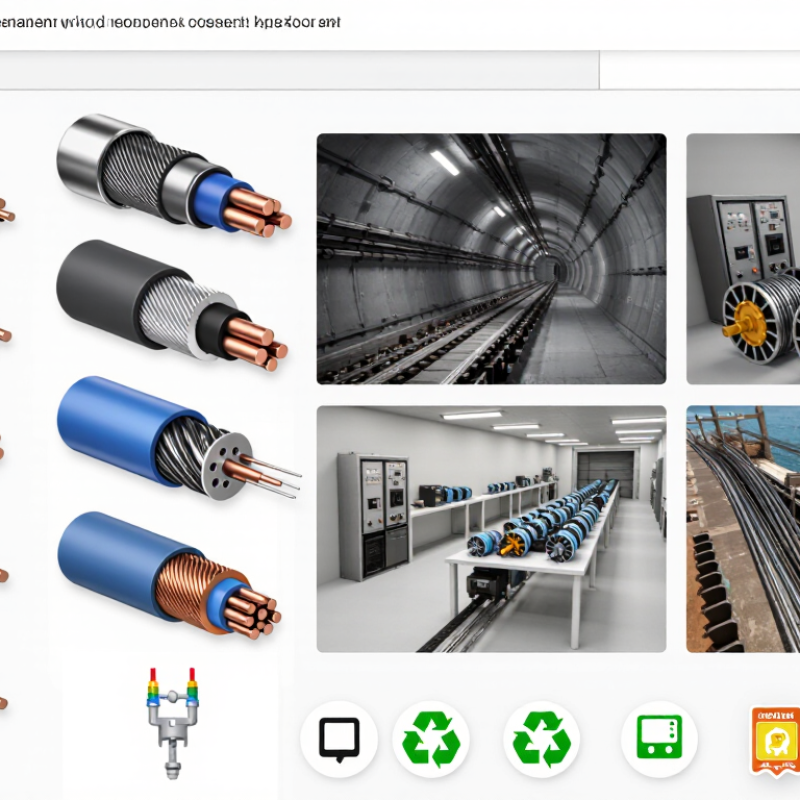
What Lead Cables Are and How They Are Classified
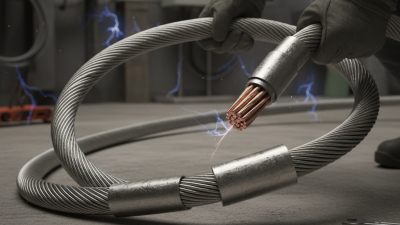
Lead cables are not usually cables made from lead conductors. The term generally describes cables protected by a lead sheath. This dense metallic layer resists moisture, chemicals, and soil pressure. It also helps shield sensitive circuits from interference.
Classification starts with the cable’s function. Power cables carry electricity, while control, signaling, and telecommunications cables carry lower-energy signals. Engineers then classify them by conductor material, insulation, sheath design, voltage rating, and installation method. Common constructions include single-core and multicore cables, armored and unarmored versions, and cables for underground, industrial, or marine environments. IEC 60228 classifies conductor sizes and resistance, while IEC 60502-1 covers many low-voltage power cable designs. These standards improve comparison, but regional specifications still differ. The label “lead cable” can be too broad.
Tips: Ask for the sheath thickness, insulation type, operating temperature, bending radius, and test certificates. Check whether “lead” means a sheath or a lead-containing component. That small wording difference can affect recycling, handling, and project approval. The U.S. Geological Survey’s Mineral Commodity Summaries 2025 reports that secondary sources supplied roughly 70% of U.S. lead consumption in recent years. This figure reinforces the value of traceable material declarations. In practice, buyers should request batch records and third-party test results. A neat datasheet is useful, but it is not proof by itself. Geological exposure, installation damage, and aging can still change performance.
2026 Top Lead Cable Types for Global Buyers
What Lead Cables Are and How They Are Classified
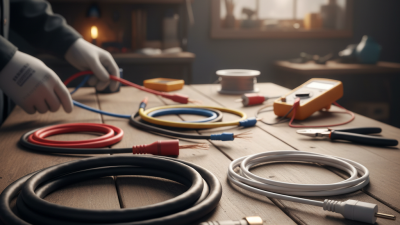
Lead cables are cable assemblies or flexible connection cables used to transfer electrical power or signals between equipment, panels, and power sources. They are commonly classified by conductor construction, insulation material, flexibility, environmental resistance, and rated voltage.
The chart compares the upper nominal voltage rating of commonly used European cable designations. The designations and voltage classes are based on IEC 60227 and IEC 60245 conventions. A higher voltage rating does not automatically indicate better suitability; buyers must also verify conductor size, current capacity, temperature range, flexibility, and installation conditions.
Key Lead Cable Types for Different Global Applications
For global buyers, lead cable selection depends on the application, not only voltage. Lead-sheathed power cables resist moisture, soil chemicals, and industrial oils. They suit underground grids, refineries, and coastal infrastructure. Lead-alloy sheaths add stronger corrosion resistance for telecom and control circuits. According to ITU Facts and Figures 2024, about 5.5 billion people were online, increasing demand for reliable communication networks. However, many telecom projects now favor lighter, lead-free designs. Lead cable remains useful where shielding and long service life outweigh installation weight.
Power engineers may choose lead-sheathed cables for tunnels, substations, and wet industrial floors. Instrumentation teams may specify them near radiation sources or heavy electromagnetic interference. The IEA Electricity 2024 report expects global electricity demand to grow strongly through 2026, placing more pressure on durable grid components. Yet, lead is toxic when poorly controlled. The World Health Organization identifies lead exposure as a major public-health concern. Compliance, sealed construction, and controlled recycling must guide every purchase. Performance alone is not enough.
Tips: Ask for sheath thickness, bending radius, fire rating, and test certificates. Confirm soil conditions before approving underground cable. Request recycled-material data and end-of-life handling procedures. USGS Mineral Commodity Summaries 2025 reports that recycled lead supplies a substantial share of global consumption, but recovery quality varies. I would also compare lead and lead-free options at the design stage. The cheaper cable may create higher installation costs. That detail is often missed.
Material, Construction, and Performance Differences
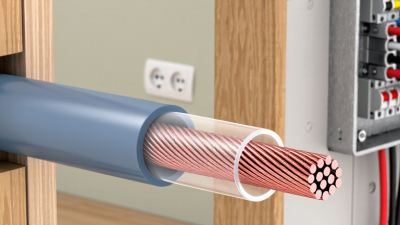
Lead cable selection in 2026 depends on more than conductor size. Material and construction control durability, weight, heat resistance, and installation risk. Copper conductors offer strong conductivity, while aluminium reduces weight and material cost. A lead sheath adds excellent moisture and chemical protection, especially in buried or industrial environments. It also adds considerable weight. That trade-off is easy to underestimate.
Construction changes performance. Single-core cables simplify high-current layouts, while multicore designs reduce installation time. Armoured lead-sheathed cables provide mechanical protection under roads, in soil, or near heavy equipment. XLPE insulation usually tolerates higher operating temperatures than traditional PVC, but the sheath, joints, and termination system still limit reliability. IEC 60502-1 remains a useful reference for power-cable construction and testing. The International Energy Agency’s Electricity 2024 report expects global electricity demand to grow by about 3.4% annually through 2026. That growth increases pressure on cable systems, but higher demand does not justify selecting oversized cables blindly.
Tips: Compare conductor material, insulation temperature, sheath thickness, bending radius, and installation depth. Request test evidence for water resistance and aging. Check the complete assembly, not only the cable.
USGS Mineral Commodity Summaries 2025 identifies batteries as the dominant use of refined lead, while cable sheathing represents a much smaller application. This matters. Lead is not automatically the best protective material. Its shielding performance can be valuable, yet its weight, handling controls, and recycling route require planning. In practice, I would question every lead specification that lacks a clear environmental or mechanical reason. Sometimes the cheaper-looking option creates the slower installation.