2026 Top Automotive Cable Types for Global Buyers

Automotive cable selection is becoming a strategic purchasing decision, not a simple component choice. The International Energy Agency reported that global electric car sales exceeded 17 million units in 2024, representing more than one-fifth of new-car sales. This shift increases demand for high-voltage battery cables, charging cables, sensor wiring, and lightweight data connections. Meanwhile, OICA recorded more than 93 million motor vehicles produced globally in 2023. Conventional vehicles still matter greatly. Global buyers therefore need cable portfolios that support electric, hybrid, and internal-combustion platforms.

The right automotive cable must survive heat, vibration, moisture, oil, bending, and electromagnetic interference. A high-voltage orange cable may carry hundreds of volts near a battery pack. A small twisted-pair data cable may support cameras, radar, or vehicle networking. Copper remains widely used, but aluminum conductors can reduce weight in suitable applications. Insulation choices also influence flexibility, temperature resistance, fire performance, and assembly cost. ISO 19642 provides a recognized framework for road-vehicle cable requirements, while manufacturers often reference OEM specifications and USCAR-related testing practices.

This guide examines the top automotive cable types expected to shape global sourcing in 2026. It connects engineering performance with procurement realities, including regional supply capacity, traceability, testing evidence, and lifecycle cost. Published market forecasts do not always agree, partly because cable, harness, and connectivity categories overlap. That limitation deserves attention. Buyers should verify every forecast against vehicle voltage, installation space, duty cycle, and certification needs. The cheapest cable can become expensive after one failed connector, one brittle insulation layer, or one delayed production batch. Reliability comes first.
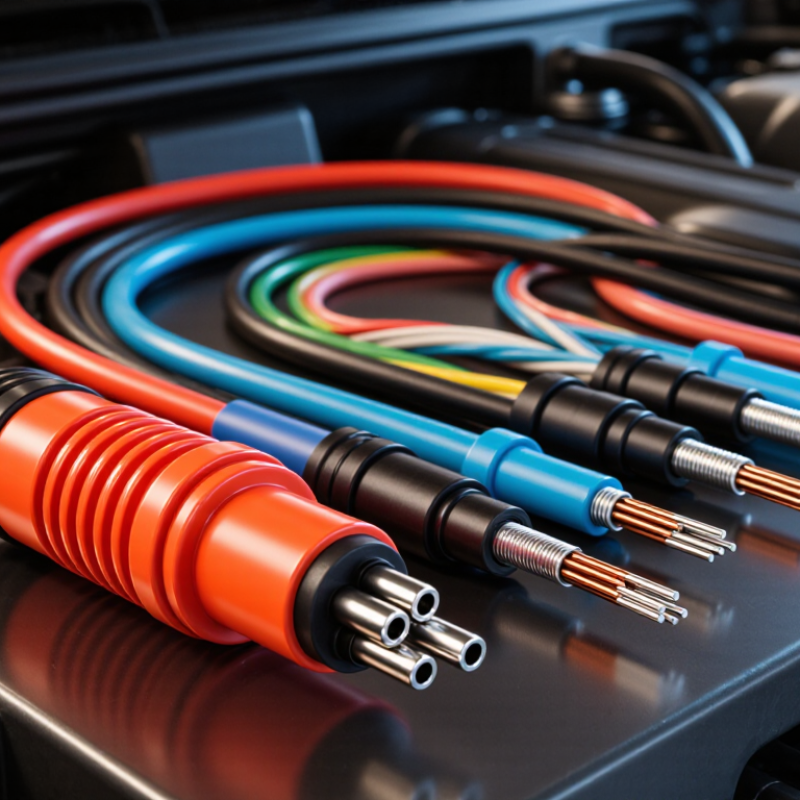
2026 Top Automotive Cable Types for Global Buyers

Automotive Cable Basics and Their Role in Modern Vehicles

2026 Top Automotive Cable Types for Global Buyers

Automotive cables are the vehicle’s hidden circulation system. They carry power, signals, data, and safety-critical commands through tight, hot spaces. Common types include battery cables, low-voltage harness wires, shielded data cables, coaxial cables, and high-voltage power cables. Copper remains popular for conductivity, while aluminum can reduce weight when connectors and corrosion controls are properly designed.

The International Energy Agency reported over 17 million electric cars sold worldwide in 2024, representing more than one-fifth of new-car sales. This shift increases demand for cables rated around 400 to 800 volts, strong insulation, shielding, and controlled bending. A high-voltage cable must resist heat, vibration, fluids, and electromagnetic interference. Its orange jacket helps identification, but color alone is not a safety system. Cable geometry and connector quality matter more.

Modern vehicles also depend on smaller data cables for cameras, sensors, displays, and driver-assistance functions. Industry testing commonly evaluates temperature cycling, abrasion, flame resistance, voltage drop, and water exposure. The Automotive Industry Action Group emphasizes disciplined control of electrical components through documented quality processes. That sounds routine. It is not.

In practical sourcing, buyers should check conductor size, insulation material, operating temperature, flexibility, shielding, and traceability. The wrong cable may fit perfectly and still fail after months of engine-bay vibration. I have seen specifications focus heavily on current capacity while overlooking bend radius. That is an expensive mistake. European, North American, and Asian vehicles may also use different connector systems and compliance requirements, so one universal cable specification rarely works well.
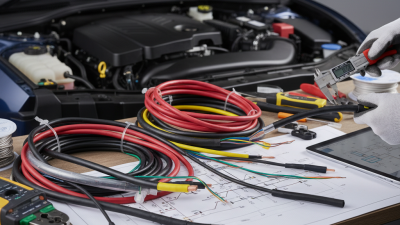
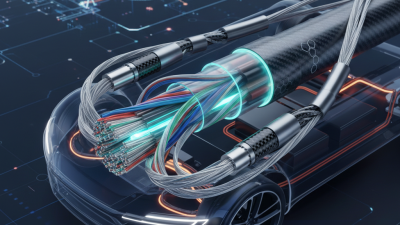
Key Automotive Cable Types and Their Primary Applications

Automotive cable selection depends on location, load, movement, and heat. Battery cables carry high current between the battery, starter, and power distribution points. They need flexible copper conductors, durable insulation, and strong terminals. Ignition cables serve spark systems and require excellent electrical insulation near intense engine heat.

Low-voltage sensor cables connect temperature, pressure, speed, and braking sensors. Their thin construction supports tight routing, but they remain vulnerable to abrasion and oil exposure. Twisted-pair communication cables reduce electromagnetic interference in vehicle networks. Shielded versions suit crowded engine compartments. High-voltage cables support electric drive units, battery packs, inverters, and charging systems. Orange insulation improves visual identification, while shielding helps control electrical noise. It is not only about voltage.

Tips: Check continuous temperature ratings, bend radius, conductor size, shielding, and insulation resistance. Compare the cable with the vehicle’s actual installation space. A catalog match can still fail in a vibrating harness.

Field inspections often show damaged jackets near clips, hinges, and sharp brackets. This is why abrasion protection and secure routing deserve equal attention. Trailer and lighting cables need weather resistance, repeated flexing, and reliable sealing around connectors. Automotive cable choices also vary by climate and regional requirements. A cable designed for a dry test environment may perform poorly under road salt, moisture, or freezing conditions. Perfect selection is uncommon; documented testing and careful installation remain essential.

2026 Top Automotive Cable Types for Global Buyers

Key automotive cable types and their primary applications, shown by representative vehicle voltage ranges.

Low-voltage cables support conventional vehicle electronics, communication networks, sensors, and power distribution. High-voltage cables are used in hybrid and electric vehicles for traction batteries, inverters, motors, and charging systems. Actual ratings vary by vehicle platform and cable specification.

How to Compare Automotive Cables by Performance and Safety

2026 Top Automotive Cable Types for Global Buyers

How to Compare Automotive Cables by Performance and Safety

Automotive cable selection should begin with the vehicle’s actual working conditions. Battery cables need low resistance and strong crimp stability. High-voltage cables require durable insulation, shielding, and clear safety markings. Sensor and data cables need signal integrity, flexibility, and protection from electromagnetic interference. A cable that performs well on a test bench may fail beside a hot engine, vibrating bracket, or sharp metal edge.

I compare conductor size, voltage rating, temperature range, bending cycles, abrasion resistance, and connector compatibility. Voltage drop matters during cold starts and high electrical loads. Insulation should resist oil, moisture, chemicals, and repeated heat exposure. For global purchasing, request test reports, material traceability, and production inspection records. Check applicable regional requirements before approval. Compliance paperwork alone is not proof of field reliability.

Tips: Test sample cables under realistic heat, vibration, and routing conditions. Inspect crimps after pulling and bending. Ask suppliers for failure data, not only promises.

A perfect cable rarely exists. I have seen oversized cables waste space, while thin cables create heat and unstable voltage. Buyers should review installation errors, because poor routing can defeat a well-designed cable. One overlooked clamp can cause damage. That lesson deserves more attention.

Global Standards for Automotive Cable Selection in 2026

Global Automotive Cable Types for Global Buyers

In 2026, automotive cable selection depends on regional standards, vehicle voltage, and installation conditions. ISO 6722 remains important for road-vehicle cables used in low-voltage circuits. IEC 60228 helps buyers verify conductor class, resistance, and stranding consistency. For broader international projects, ISO 19642 supports structured cable requirements across vehicle applications. Always check the latest edition. Standards can change faster than purchasing habits.

A cable for a battery pack needs different protection from one inside a door. High-voltage systems require insulation, shielding, voltage ratings, and controlled bend radii. Low-voltage harnesses still need resistance to heat, oil, vibration, and abrasion. SAE J1128 may guide North American sourcing, while regional regulations may add separate fire, chemical, or traceability requirements. Ask for test reports, not only certificates. Test conditions matter.

Small details matter. A cable routed near a turbocharger may face severe thermal cycling. A door harness may bend thousands of times during service. In technical evaluations, suppliers sometimes specify the conductor correctly but overlook terminal compatibility. That mistake is expensive. A neat datasheet can still mislead. Buyers should compare conductor size, insulation thickness, shielding coverage, outer diameter, and minimum bend radius. They should also confirm batch identification and ageing results. I would not treat one global standard as universal. Real vehicles expose gaps between laboratory testing and daily operation. That gap deserves a second review.

Choosing the Right Automotive Cable for Different Vehicle Systems

Choosing the Right Automotive Cable for Different Vehicle Systems

Automotive cable selection should begin with the vehicle system, not the cable price. Battery and starter circuits need low-resistance conductors for high current and short voltage drops. Use suitable cross-sections, heat-resistant insulation, and secure terminals near the battery. A cable that feels thick may still fail under continuous engine heat.

Powertrain sensors require a different design. Twisted-pair cables can reduce signal interference in communication networks. Shielded versions suit sensitive sensors, cameras, and control units near motors or inverters. Check impedance, shielding coverage, bend radius, and connector sealing. Small details matter.

Electric vehicles create stricter demands. High-voltage cables need durable insulation, controlled shielding, and clear identification. Their jackets must resist coolant, oil, vibration, and repeated movement. Charging cables also need flexible conductors and reliable strain relief. Hybrid systems may combine high-voltage and low-voltage wiring, so routing separation deserves careful inspection.

Cabin and body systems usually need flexible, compact cables. Door harnesses face constant bending, while lighting circuits may need moisture resistance. Always compare temperature ratings with the actual installation area, not the average vehicle temperature. Testing should include vibration, abrasion, thermal cycling, and voltage-drop checks.

Real-world installation can challenge a perfect specification. A cable may pass laboratory testing but rub against a bracket after thousands of kilometers. I have found routing assumptions are often too optimistic. Leave practical clearance, document the test conditions, and review failures without hiding them.

2026 Top Automotive Cable Types for Global Buyers - Choosing the Right Automotive Cable for Different Vehicle Systems

Cable Type Typical Vehicle System Typical Voltage Class Conductor and Insulation Typical Temperature Range Key Performance Requirements Common Standards or Test References Selection Guidance
Low-Voltage Primary Wire Lighting, body electronics, sensors, switches, and control modules 12 V or 24 V systems Stranded copper; thin-wall PVC, cross-linked polyolefin, or similar automotive insulation Often approximately -40°C to +105°C; higher-temperature constructions are available Flexibility, abrasion resistance, flame retardance, oil resistance, and reliable crimping ISO 6722; SAE J1128; applicable vehicle wiring specifications Select conductor size from continuous current, voltage-drop, bundling, ambient temperature, and allowable insulation temperature.
Battery and Starter Cable Battery connections, starter motors, alternators, and high-current grounds 12 V or 24 V systems; low voltage but very high current Large-section fine-stranded copper with flexible, oil- and abrasion-resistant insulation Commonly approximately -40°C to +105°C, depending on construction and location Low electrical resistance, high short-duration current capacity, vibration resistance, and secure terminals SAE J1127; ISO 6722 where applicable; OEM and terminal-system requirements Size for cranking current and permissible voltage drop; route away from exhaust heat and protect against chafing.
Shielded Signal Cable Engine sensors, battery-management signals, audio, video, and low-level instrumentation Typically extra-low-voltage signal circuits Twisted or paired copper conductors with foil, braid, or combined shielding Commonly approximately -40°C to +105°C; select higher ratings near engines or power electronics Low capacitance, controlled impedance where required, electromagnetic compatibility, and stable signal transmission ISO 6722 for cable construction; CISPR 25 and ISO 11452 for vehicle EMC evaluation Match shielding, pair geometry, impedance, and termination method to the communication or sensor circuit.
Twisted-Pair Data Cable Controller networks, diagnostic links, and high-speed in-vehicle communication Typically low-voltage differential signaling Balanced twisted copper pair; shielded or unshielded construction selected by network design Often approximately -40°C to +105°C; verify the platform's installation rating Characteristic impedance, pair balance, insertion loss, crosstalk control, bend-life, and EMC performance ISO 11898 for CAN physical-layer applications; ISO 17987 for LIN; Ethernet specifications where applicable Use the cable geometry and impedance specified by the network; maintain twist, pair separation, and termination rules.
High-Voltage Battery Cable Electric and hybrid vehicle battery packs, inverters, converters, and power distribution units Typically above 60 V DC; platform voltage commonly ranges from approximately 200 V to 1000 V DC Fine-stranded copper or aluminum; orange high-voltage insulation, often cross-linked or thermoplastic Commonly approximately -40°C to +125°C; select higher temperature capability near inverters and motors High voltage withstand, low resistance, abrasion and fluid resistance, shielding, touch protection, and orange identification ISO 19642; ISO 6469-3; UN Regulation No. 100; LV 216 or equivalent vehicle requirements Verify continuous and peak current, insulation coordination, creepage, clearance, shielding, connector compatibility, and service-disconnect requirements.
Shielded E-Motor and Inverter Cable Traction inverter to electric motor and other high-frequency power connections High-voltage DC bus and variable-frequency motor output High-flex stranded conductors with conductive or braided shielding and high-temperature insulation Often approximately -40°C to +150°C, depending on motor-bay exposure and cable design Partial-discharge resistance, EMC shielding, vibration endurance, flex life, thermal stability, and low inductance ISO 19642; LV 216 or equivalent; ISO 11452 and CISPR 25 for EMC evaluation Consider inverter switching frequency, shield termination at both ends, phase symmetry, bend radius, and motor-side sealing.
Charging Cable and Charge-Inlet Wiring AC charging inlets, DC fast-charging circuits, proximity, pilot, and temperature-sensing lines AC charging commonly up to 480 V; DC charging commonly up to 1000 V, subject to the charging architecture Flexible copper conductors with insulation and jacket selected for outdoor, fluid, and repeated-use exposure Commonly approximately -40°C to +105°C; liquid-cooled systems require additional hose and material compatibility High current, touch safety, thermal monitoring, weather resistance, flexing endurance, and secure locking IEC 61851; IEC 62196; SAE J1772 where applicable; ISO 17409 for conductive power transfer Confirm regional charging interface, current rating, cooling method, ingress protection, and cable bend-cycle requirements.
Coaxial RF Cable Radio, navigation, cellular, Wi-Fi, satellite positioning, and vehicle antenna systems Low-power RF circuits; voltage depends on the connected radio equipment Central conductor, dielectric, conductive shield, and protective jacket with controlled impedance Often approximately -40°C to +105°C; higher ratings may be required in roof or engine-compartment routes Stable impedance, low attenuation, shielding effectiveness, connector retention, and controlled bend radius ISO 6722 for applicable automotive cable properties; ISO 11452 and CISPR 25 for EMC-related testing Match impedance and frequency range to the RF system; avoid sharp bends, crush points, and poorly bonded shields.
Flat Flexible Cable Instrument panels, steering-wheel controls, displays, cameras, and compact door modules Typically low-voltage signal or control circuits Parallel copper conductors in a thin flexible polymer construction Commonly approximately -40°C to +85°C or +105°C, depending on material and location Small bend radius, repeated flexing, low profile, controlled contact spacing, and secure termination Applicable automotive wire, flex-life, flammability, and module-specific test requirements Use when space is limited; define bend direction, minimum bend radius, cycle count, conductor pitch, and connector interface.
Thermocouple and Temperature-Sensor Wire Exhaust, battery, motor, inverter, coolant, and thermal-management monitoring Low-level sensor signals Thermocouple alloys or copper conductors with insulation selected for temperature, chemical, and electrical stability Application-dependent; high-temperature exhaust sections can require ratings above 200°C Thermal accuracy, noise rejection, insulation integrity, vibration resistance, and chemical compatibility IEC 60584 for thermocouples; ISO 6722 for applicable automotive cable properties Match the conductor alloy and polarity to the sensor type; maintain correct routing and compensation over the full temperature range.
Buyer Checklist: Confirm voltage, continuous and peak current, voltage drop, conductor material, insulation temperature rating, chemical exposure, flexing and vibration conditions, shielding needs, connector compatibility, regional standards, and the required validation tests before approving an automotive cable design.