Why Is Copper Cable Essential for Modern Communication and Power Systems?
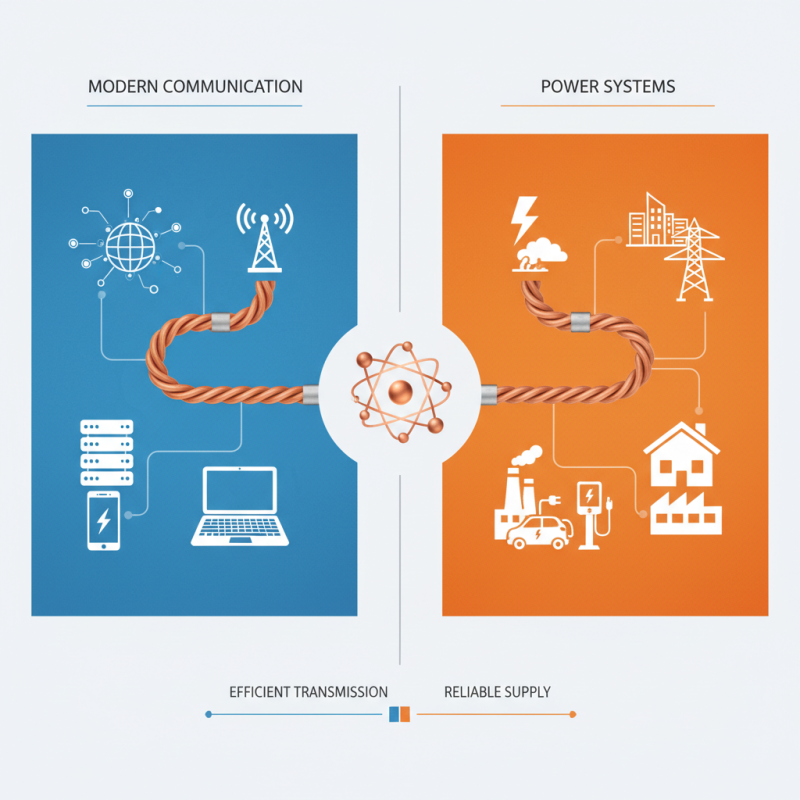
Copper cable is a crucial component in today's communication and power systems. Its unique properties ensure efficient transmission of electricity and data. The reliability of copper cable supports various applications, from the internet to electrical grids.
Many people may overlook the importance of copper cable. However, its role in enabling rapid data transfer and maintaining stable power supply is vital. Without it, modern technology would struggle to function effectively.
Despite advances in wireless technology, copper cable remains irreplaceable in many scenarios. It serves as the backbone for various infrastructure, connecting homes, businesses, and cities. We must continuously reflect on its value in our evolving digital age.
The Role of Copper Cable in Facilitating High-Speed Data Transmission
Copper cable plays a vital role in modern communication. Its conductivity supports high-speed data transmission effortlessly. According to a recent report by the International Copper Association, copper cables can handle bandwidths of up to 10 Gbps. This capability is essential for today’s applications, from streaming to cloud computing.
The demand for faster internet increases every year. A study reveals that over 90% of global internet traffic relies on copper and fiber optic networks. Copper cables are pivotal in serving both urban and rural areas. They can bridge the digital divide, ensuring connectivity for millions. However, their installation and maintenance can pose challenges. Infrastructure updates often lag behind demand.
Yet, not all is perfect with copper cables. Environmental factors can affect their performance. Cooling systems may require upgrades to prevent overheating. Moreover, copper mining has environmental impacts, raising ethical questions. Balancing efficiency and sustainability is increasingly critical as our reliance on these cables grows. The conversation about copper’s future must include these vital issues.
Copper Cable's Contribution to Power Distribution Systems: A Detailed Analysis
Copper cables play a critical role in power distribution systems. They efficiently conduct electricity over long distances. This characteristic is vital for delivering power from generation sites to homes and businesses. Copper's high conductivity ensures minimal energy loss during transmission. It is a key component in transformers and substations, crucial for reliable service.
In addition to conductivity, copper cables are durable and versatile. They can withstand various environmental conditions, making them suitable for outdoor installations. However, copper is not without its challenges. The costs of copper can fluctuate significantly, impacting project budgets. Maintenance is also essential, as wear and tear can lead to inefficiencies.
Overall, copper's role in power distribution is indispensable but must be managed wisely. Its benefits are clear, yet the drawbacks demand consideration. As technology evolves, exploring alternative materials could provide new solutions while acknowledging copper's enduring significance in our infrastructure.
Why Is Copper Cable Essential for Modern Communication and Power Systems?
| Parameter |
Description |
Impact |
| Conductivity |
Copper cables have high electrical conductivity, optimal for data transmission. |
Enhanced signal quality and reduced energy loss. |
| Durability |
Copper is resistant to corrosion and offers long-term reliability. |
Reduced maintenance costs and longer lifespan of installations. |
| Flexibility |
Copper cables are easier to install in various environments. |
Faster installation times and adaptability to complex layouts. |
| Cost-Effectiveness |
Copper cables are cost-effective for medium to low distance communications. |
Lower initial investment for infrastructure. |
| High Bandwidth |
Copper cables support high bandwidth applications, relevant for modern data needs. |
Facilitates modern communication technologies like broadband. |
Comparative Assessment of Copper vs. Fiber Optic Cables in Communication
In the debate between copper and fiber optic cables, both have their strengths. Copper cables are well established in communication systems. They are cost-effective and widely used in residential and commercial setups. According to a 2022 market report, more than 60% of global communication networks still rely on copper.
Fiber optics offer superior speed and bandwidth. They can transmit data over longer distances without significant loss. However, their installation costs are higher. A study showed that fiber optics could be up to 30% more expensive to install than copper alternatives.
Despite these advantages, copper cable remains essential. In areas with low infrastructure investment, it provides a reliable solution. Many technicians prefer copper for its easy handling and flexibility. While fiber optics are often touted as the future, copper's established presence suggests that a complete transition may take longer than anticipated.
In practice, some businesses still face connectivity issues with fiber. Maintenance for fiber optics can be challenging, requiring specialized skills. So, while fiber is advanced, copper is sometimes more practical. This reality indicates that both cables will coexist for the foreseeable future.
Statistical Overview: Global Consumption of Copper in Telecommunications
Copper cables play a vital role in modern communication and power systems. Their effectiveness in transmitting signals makes them indispensable. Globally, copper consumption in telecommunications has seen a steady rise. This rise is driven by increasing data demands and the expansion of the internet.
In 2020 alone, around 1.1 million tons of copper were used in this sector. The growing need for faster, more reliable connections highlights the material's significance. However, the mining and production processes can be environmentally challenging. It’s essential to balance demand with sustainable practices.
Tip: Consider using alternative materials in low-demand applications. This can help reduce copper's environmental impact. As technology evolves, exploring recyclability can also improve sustainability.
Despite its benefits, copper has limitations. For instance, its conductivity can be affected by temperature changes. Additionally, production costs fluctuate, impacting affordability. These factors prompt ongoing research into new materials and methods for improved capacity.
Environmental Impacts of Copper Cable Production and Recycling Practices
The production of copper cables has significant environmental impacts that cannot be ignored. According to the International Copper Study Group (ICSG), the mining and refining of copper generate substantial waste. In fact, one ton of copper mined can produce approximately 99 tons of waste material. This waste can lead to soil and water contamination, affecting local ecosystems.
Recycling copper cables is essential to mitigate these impacts. The environmental benefits of recycling copper are considerable. The Copper Development Association claims that recycling just one ton of copper can save over 100,000 kilowatt-hours of electricity. Despite this, the recycling rates for copper remain troublingly low. In many regions, less than 30% of copper is recycled, leading to more reliance on mining.
The recycling process itself is not without flaws. It can emit harmful pollutants if not managed properly. For instance, studies show that inadequate recycling methods can release toxic substances into the air and water. This raises questions about the sustainability of current practices. Improving recycling technologies should be a priority for the industry. It’s clear that while copper is vital for modern infrastructure, the environmental toll of its lifecycle demands urgent attention.
Environmental Impacts of Copper Cable Production and Recycling Practices