Top Reinforcing Steel Bars Manufacturers Worldwide
reinforcing steel bars form the structural backbone of bridges, towers, tunnels, and housing worldwide. Their performance depends on more than annual output. Chemical composition, rib geometry, weldability, ductility, and traceable testing records all matter on a real construction site. A bundle may look identical from a distance. Its heat number and mill certificate can reveal a very different story.
The World Steel Association reported approximately 1.89 billion tonnes of crude steel production worldwide in 2023, according to World Steel in Figures 2024. China and India remained among the largest national producers. However, crude steel volume does not equal reinforcing-bar leadership. Re-rolling capacity, billet quality, regional standards, and delivery reliability must also be examined. The OECD’s 2024 steel-market analysis highlights continuing concerns about excess capacity, trade pressure, and uneven demand. These forces influence manufacturer pricing and investment decisions.
This guide evaluates leading Reinforcing Steel Bars manufacturers through practical and technical criteria. It considers production scale, certifications, product range, export reach, quality systems, and project experience. Standards such as ASTM A615, BS 4449, EN 10080, and ISO 6935-2 provide useful comparison points. Yet standards alone cannot guarantee consistent site performance. Independent tensile tests, bend tests, corrosion controls, and batch traceability remain essential. Very important.
No ranking stays permanent. Energy costs, low-carbon steelmaking, freight disruptions, and infrastructure spending can quickly change market positions. Some company data also remains difficult to compare fairly. That limitation deserves attention, not concealment. Readers should verify current certificates, plant locations, and delivery records before selecting a global supplier.
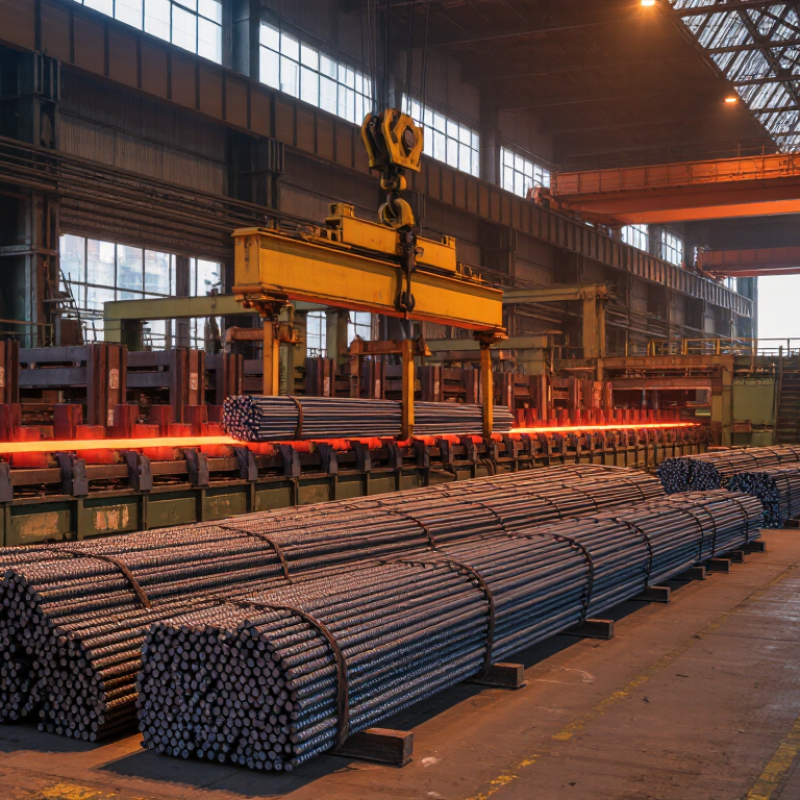
Definition and Role of Reinforcing Steel Bars
Reinforcing steel bars, commonly called rebar, are steel rods placed inside concrete to resist tensile forces. Concrete performs well under compression but remains weak when pulled. Rebar supplies the missing tensile capacity. Its ribs create mechanical interlock with surrounding concrete, helping transfer loads along beams, slabs, columns, and foundations.
The World Steel Association reported 1.892 billion tonnes of crude steel production in 2023. That figure shows the enormous scale behind modern construction materials, although crude steel is not the same as finished rebar. Common reinforcing grades provide yield strengths around 400–600 MPa, depending on regional standards and product design.
Engineers specify diameter, spacing, lap length, and concrete cover carefully. A 16-millimeter bar placed incorrectly can weaken an otherwise well-designed slab.
Its role extends beyond carrying everyday loads. Reinforcement helps control shrinkage cracks, improves ductility during earthquakes, and maintains structural performance after concrete cracking.
Technical guidance from the International Federation for Structural Concrete emphasizes anchorage, bond, and detailing as essential design factors.
Site conditions still matter. Rust, mud, poor bar supports, or careless bending can reduce reliability. The definition sounds simple. The execution is not.
Industry carbon reports also identify steel production as a major emissions source, encouraging recycled content, efficient fabrication, and more transparent material declarations. Yet lower emissions should never excuse uncertain strength data or weak inspection records.
Key Standards for Evaluating Global Manufacturers
Top Reinforcing Steel Bars Manufacturers Worldwide
Evaluating a global reinforcing steel bar manufacturer begins with relevant product standards. ASTM A615 and ASTM A706 are common in North America. EN 10080 is widely used across Europe. National requirements may still differ. A credible supplier should explain which standard applies to each project, not simply display certificates.
Check the quality system, test methods, and traceability records. ISO 9001 can indicate controlled processes, but it does not prove every bar meets specification. Ask for mill test certificates linked to heat numbers. Review yield strength, tensile strength, elongation, chemical composition, and bend-test results. Independent laboratory verification adds confidence. Calibration records matter too. Small gaps can become costly.
Factory capability deserves close attention. Inspect furnace controls, rolling lines, cooling systems, storage areas, and label accuracy. Bars should remain identifiable from production through delivery. Review dimensional tolerances, bundle weights, corrosion protection, and shipment damage procedures. Environmental data, energy use, and recycled steel content may also influence procurement decisions. A site audit often reveals more than a polished presentation. No checklist is perfect. Some buyers may overvalue low prices and overlook inconsistent testing, delayed documents, or weak complaint handling. That is where careful questioning becomes essential.
Top Reinforcing Steel Bars Manufacturers Worldwide — Key Standards for Evaluating Global Manufacturers
Minimum specified yield strength of representative reinforcing-bar grades
Yield strength is a core technical benchmark when comparing reinforcing steel suppliers across markets. The values shown are representative minimum specified yield strengths from widely used grades and standards; actual product selection should also consider ductility, chemical composition, weldability, dimensional tolerances, certification, and project-specific requirements.
Reference standards: ASTM A615 Grade 60, BS 4449 B500B, EN 10080 B500B, ISO 6935-2 B500B, JIS G3112 SD390 and SD490, and AS/NZS 4671 500N.
Leading Reinforcing Steel Bar Manufacturers by Region
Top Reinforcing Steel Bars Manufacturers Worldwide
Leading Reinforcing Steel Bar Manufacturers by Region
Regional strength in reinforcing steel bars closely follows crude steel capacity, construction demand, and local raw materials. The World Steel Association reported 1.84 billion tonnes of global crude steel production in 2024. Asia and Oceania accounted for roughly 74% of that volume. This makes the region the largest supply base for reinforcing bars, especially for high-rise housing, bridges, and transport projects.
China, India, Japan, and South Korea remain major Asian production centers. India’s 2024 crude steel output reached about 149 million tonnes, according to World Steel Association data. Its expanding urban infrastructure supports strong demand for ribbed bars and seismic-grade products. Japan and South Korea generally compete through strict dimensional control and advanced quality testing. Capacity alone is not enough. Mill reliability, bar traceability, and delivery distance often decide project value.
In Europe, North America, and the Middle East, manufacturers follow different operating models. European producers increasingly use lower-carbon processes, while North American mills rely heavily on electric arc furnaces and recycled scrap. The International Energy Agency identifies steel decarbonization as a major industrial priority, but regional progress remains uneven. In Turkey and the Gulf region, export access and port logistics strongly influence reinforcing bar supply. African markets are growing, yet local capacity and power reliability can limit consistency. The comparison is useful, but imperfect: global steel statistics rarely separate reinforcing bars from other long products. Buyers should verify mill certificates, yield strength, bend performance, and delivery records before ranking suppliers.
Top Reinforcing Steel Bars Manufacturers Worldwide - Leading Reinforcing Steel Bar Manufacturers by Region
| Region | Leading Steelmaking Country | 2023 Crude Steel Output
(Million Tonnes) | Common Rebar Standard | Common Grade Designations | Typical Reinforcing Steel Bar Products |
| East Asia | China | 1,019.1 | GB/T 1499.2 | HRB400E, HRB500E | Hot-rolled ribbed bars, seismic-grade bars, coiled rebar |
| South Asia | India | 140.8 | IS 1786 | Fe 500, Fe 500D, Fe 550D | Thermo-mechanically treated bars, corrosion-resistant bars, cut-to-length bars |
| East Asia | Japan | 87.0 | JIS G 3112 | SD345, SD390, SD490 | Deformed bars, weldable bars, high-strength reinforcement |
| North America | United States | 80.7 | ASTM A615 / ASTM A706 | Grade 40, Grade 60, Grade 80 | Deformed bars, weldable low-alloy bars, epoxy-coated bars |
| Eastern Europe | Russia | 76.0 | GOST 34028 | A500C, A600C | Hot-rolled ribbed bars, weldable reinforcement, bundled bars |
| East Asia | South Korea | 66.7 | KS D 3504 | SD400, SD500, SD600 | Deformed bars, high-strength bars, construction mesh feedstock |
| Western Europe | Germany | 35.4 | EN 10080 / DIN 488 | B500B, B500C | Weldable ribbed bars, cut-and-bent reinforcement, prefabricated cages |
| Southern Europe | Türkiye | 33.7 | TS 708 | B420C, B500C | Hot-rolled deformed bars, export-length bars, wire rod and mesh feedstock |
| South America | Brazil | 31.9 | ABNT NBR 7480 | CA-50, CA-60 | Deformed bars, plain bars, welded wire reinforcement |
| Middle East | Iran | 31.1 | ISIRI 3132 | A2, A3, A4 | Ribbed bars, seismic reinforcement, cut-to-length construction bars |
Note: 2023 crude steel output figures are national steelmaking totals reported by the World Steel Association and are not rebar-only production figures. Product grades and standards may vary by mill, application, and destination market.
Production Technologies and Quality Control Practices
Reinforcing steel production now demands tighter process control. The World Steel Association reported 1.84 billion tonnes of crude steel production in 2024. That scale makes small quality variations significant. Modern mills use electric arc furnaces or integrated blast-furnace routes. They control billet chemistry with automated sampling and optical emission spectrometers. Reheating often reaches about 1,050–1,150°C before rolling. Precise temperature control supports stable rib geometry and strength.
Thermomechanical processing can refine grain structure while reducing alloying requirements. Water boxes rapidly cool the bar surface, creating a stronger outer layer. Core temperature must remain balanced. Excessive cooling may reduce ductility. Quality teams check diameter, rib height, tensile strength, elongation, and bend performance. These tests align with requirements such as ISO 6935-2 and ASTM A706. Independent laboratories commonly verify calibration and traceability. Every heat should connect to a test certificate, furnace record, and rolling batch.
Production data is not always clean. Manual measurements can disagree with automated sensors. That weakness deserves attention. The International Organization for Standardization emphasizes documented inspection and measurement systems, while World Steel Association sustainability data shows continuing pressure to lower energy use and emissions. Plants increasingly monitor electricity, cooling-water flow, mill speed, and rejection rates in real time. Still, digital dashboards cannot replace skilled operators. A scratched rib, delayed sample, or mislabeled bundle can undermine otherwise impressive technology.

