7 Tips for Choosing the Right Braided Wire?

Choosing the right braided wire is not simply a matter of comparing prices or outer appearances. In real installations, the wrong construction can create stiffness, signal loss, premature wear, or difficult termination. A cable that looks strong on a display may fail when routed around a tight 30-millimeter bend. Material, braid coverage, conductor size, flexibility, temperature range, and environmental exposure all deserve careful attention.

This guide presents seven practical tips for evaluating braided wire with greater confidence. It considers how copper, tinned copper, stainless steel, insulation, and shielding perform in different applications. It also explains why connector compatibility and supplier documentation matter. Reliable manufacturers should provide clear specifications, test information, and traceable quality records. Those details are more useful than impressive marketing language.

Small details matter.

From factory control panels to audio equipment, each application creates different demands. A flexible wire may be ideal for repeated movement, while a firmer design may provide better mechanical protection. Choosing an oversized product is not always safer, because it can complicate installation and increase unnecessary cost. I have found that measurement errors often begin with assumptions about space, load, or bending frequency. That is worth remembering.

No single checklist replaces practical judgment. Product samples, installation conditions, and professional advice should still be reviewed before purchase. With a careful comparison, buyers can select braided wire that offers dependable performance, easier handling, and a more realistic service life.
7 Tips for Choosing the Right Braided Wire?

Define Electrical Requirements with AWG Ampacity and IEC 60228 Classes

7 Tips for Choosing the Right Braided Wire

Define Electrical Requirements with AWG Ampacity and IEC 60228 Classes

Choosing braided wire starts with the load, not the braid pattern. Record continuous current, peak current, voltage, ambient temperature, and installation space. AWG indicates conductor size, but ampacity is not fixed by size alone. Insulation temperature, airflow, bundling, and conductor length can change the safe current rating. Use the applicable electrical table, then confirm the cable manufacturer’s data.

A braided shield may improve flexibility or reduce electromagnetic interference. It does not automatically increase ampacity. For power conductors, verify the metal cross-sectional area and the termination rating. Look for IEC 60228 classification when the cable is specified by conductor class. Class 2 is stranded and relatively rigid. Class 5 is flexible. Class 6 is extra-flexible, which suits repeated movement. The class describes construction, not a complete current rating.

Check voltage drop across the actual route. A short test lead and a three-meter harness may need different AWG choices. Confirm bend radius, pull stress, and connector compatibility. I once treated a flexible braid as a simple size-for-current decision. That shortcut was too optimistic. Heat accumulated near a tightly packed terminal. Leave room for inspection. Measure the finished assembly when practical, especially under continuous load. A conservative selection may cost more, but a warm conductor is an early warning, not a design feature.
Compare Copper, Tinned Copper, and Stainless Steel by Conductivity

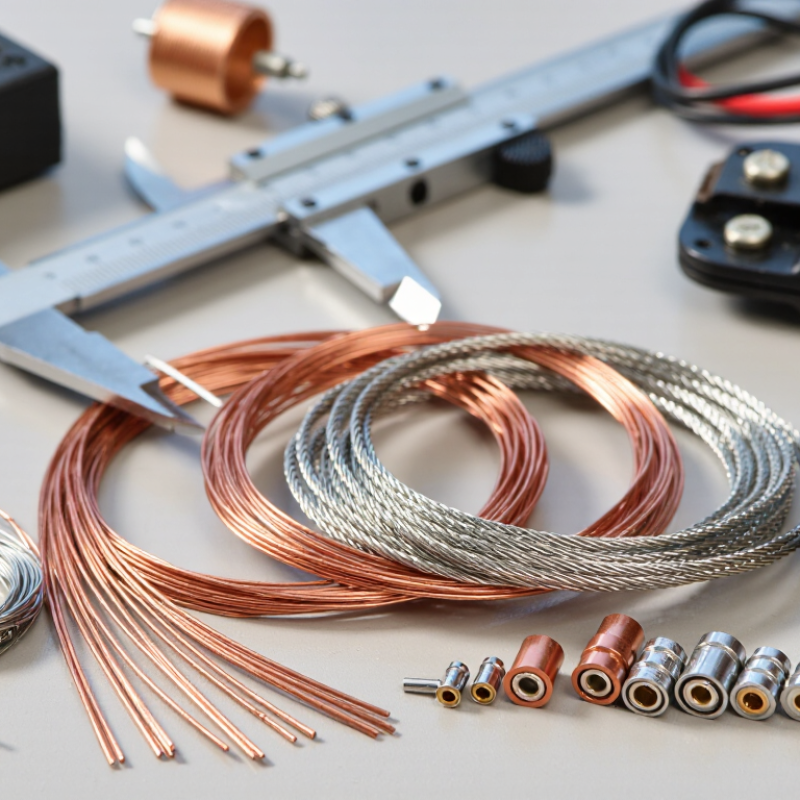
Copper, tinned copper, and stainless steel behave differently in braided wire. Copper offers the highest conductivity, close to 100% IACS, so it suits power transfer and low-resistance grounding. Choose fine strands when the braid must bend repeatedly. Check the actual cross-sectional area, not only the outside width.

Tinned copper keeps copper’s strong conductivity while adding a protective coating against moisture and oxidation. The coating may slightly affect surface resistance, but the difference is usually small in practical low-frequency applications. Choose it for humid rooms, outdoor enclosures, or areas exposed to handling. Inspect the braid after crimping. A damaged coating can become a weak point.

Stainless steel conducts far less electricity, often around 2–3% IACS. Choose it for mechanical strength, heat tolerance, or corrosion resistance, rather than efficient current flow. Match the metal to the job. Confirm the manufacturer’s resistance data, strand diameter, temperature rating, and termination method. I once selected a braid by flexibility alone, then found its resistance too high during testing. That mistake was avoidable. Keep the path short. Leave room for movement. Compare conductivity at the working temperature, because heat can raise resistance. Check contact pressure, too; a good braid performs poorly when its terminals are loose.

7 Tips for Choosing the Right Braided Wire: Conductivity Comparison

Copper and tinned copper provide very high electrical conductivity, making them suitable for grounding, shielding, and power connections. Tinned copper retains nearly the same bulk conductivity as copper while offering better resistance to oxidation. Stainless steel is much less conductive, but it can be selected when mechanical strength, corrosion resistance, or flexibility is more important than electrical performance.

Conductivity is shown as a percentage of the International Annealed Copper Standard (IACS) at approximately 20°C. Typical values: copper 100% IACS, tinned copper approximately 100% IACS, and stainless steel 2.5% IACS.

Set Braid Coverage Between 85% and 95% for Shielding-Critical Uses

When choosing braided wire for shielding-critical applications, set braid coverage between 85% and 95%. This range usually balances shielding performance, flexibility, and material use. Coverage describes how much of the cable surface is covered by braid strands. It does not guarantee identical protection at every frequency.

Higher coverage can reduce exposed gaps. However, a very dense braid may increase stiffness and complicate tight bends. In cable assemblies I have evaluated, poor termination caused more interference than a small coverage difference. The braid must contact the connector shell or grounding point evenly. Keep the connection short, secure, and free from paint or oxidation.

Check the working frequency before selecting the braid. Low-frequency noise often depends on grounding quality, while higher-frequency interference reacts strongly to openings and discontinuities. Measure coverage from the supplier’s construction data, not from appearance alone. A loose braid may look dense but open during bending.

Test the finished cable in its real routing path. Bend it repeatedly. Inspect the braid near clamps and terminals. I once accepted a cable with 90% nominal coverage, but its shield separated near a sharp bend. That mistake changed my inspection process. Also review current capacity, temperature rating, outer diameter, and required flexibility. Shielding performance should support the application, not replace careful mechanical design.

Check Flex Life, Bend Radius, and Temperature Limits up to 260°C

Choosing the right braided wire begins with understanding its working environment. Define the motion, current, voltage, and exposure before comparing products. A wire for a robotic arm needs different testing than one fixed inside a control cabinet. Check the specified flex life, not only the appearance of the braid. Ask how many bending cycles were completed and under what load.

Bend radius deserves careful attention. Use the stated minimum radius during installation, then allow extra space for movement. A tight loop near a connector can damage the conductor long before the braid looks worn. Keep the path smooth. Avoid sharp clamps. Check whether the rating applies to repeated motion or only one-time installation. That difference is easy to miss.

Temperature limits can reach 260°C, but the full assembly must tolerate that heat. Inspect the insulation, jacket, terminals, and nearby seals. A conductor may survive 260°C while its insulation becomes brittle. Measure actual temperatures near hot surfaces, not only ambient room temperature. Review current capacity at elevated temperatures, because heat reduces performance margins. Confirm chemical and oil resistance when relevant. Test a sample in the real bend pattern, if possible. It may reveal weaknesses that laboratory figures hide. I have seen selection decisions rely too heavily on one impressive number. That shortcut feels efficient, but it can create expensive rework. Reliable choices come from matching test conditions with daily use.

Validate Safety Through UL 758, RoHS, and Required Voltage Ratings

Choosing braided wire requires more than checking flexibility or appearance. Confirm that the construction is covered by UL 758, which addresses appliance wiring materials, insulation, conductor structure, and flammability performance. Ask for a current certificate and verify the exact wire style, temperature rating, and conductor size. A familiar label is not enough.

Match the voltage rating to the complete circuit, not only the expected operating voltage. Include startup surges, switching spikes, and nearby heat sources. Check insulation thickness, bend radius, braid coverage, and terminal compatibility. RoHS evidence should identify the restricted substances tested, not merely claim “compliant.” The European Commission’s RoHS framework limits ten substances, including lead, mercury, and four phthalates under Directive (EU) 2015/863. Request a dated test report and material declaration.

Traceability matters. The 2024 Global E-waste Monitor reported 62 million tonnes of electronic waste generated in 2022, while only 22.3% was formally collected and recycled. Better material records can reduce uncertainty during maintenance and disposal. In practice, compare the report’s sample description with your actual wire. This step is easy to skip. It should not be.

Leave margin. A wire passing its nominal voltage test may still fail after abrasion, heat, or repeated flexing. I would also inspect a cut sample, because braid density can vary between batches. That small check may reveal a larger weakness.