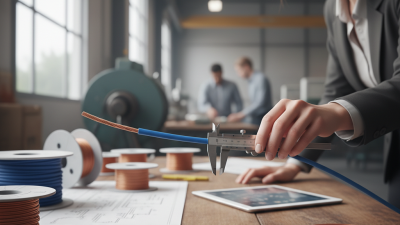
Choosing a reliable power wire manufacturer in China requires more than comparing prices. Global buyers must examine production experience, material quality, testing systems, and export performance. A factory may offer attractive quotations, yet its real capability appears in copper consistency, insulation thickness, and batch documentation.
This guide introduces China’s top 10 power wire manufacturers for international buyers. The selection focuses on manufacturing scale, product range, quality management, customization, and overseas service. It also considers practical details, such as conductor materials, voltage ratings, temperature resistance, packaging, and delivery coordination. These factors matter when wires must perform inside industrial equipment, buildings, renewable energy systems, or distribution panels.
Specifications matter most.
However, no ranking can fit every purchasing need. One manufacturer may excel in high-volume orders, while another may respond better to smaller customized projects. Certifications should also be checked against the destination market, not accepted blindly from a product page. Buyers should request current test reports, samples, factory evidence, and clear warranty terms before signing contracts.
The companies discussed here represent useful starting points, not automatic choices. Their capabilities, lead times, and service quality may change over time. Even experienced buyers can overlook small details, including conductor flexibility, drum labeling, or moisture protection during shipping. A careful comparison can reduce those risks and support a more dependable sourcing decision.
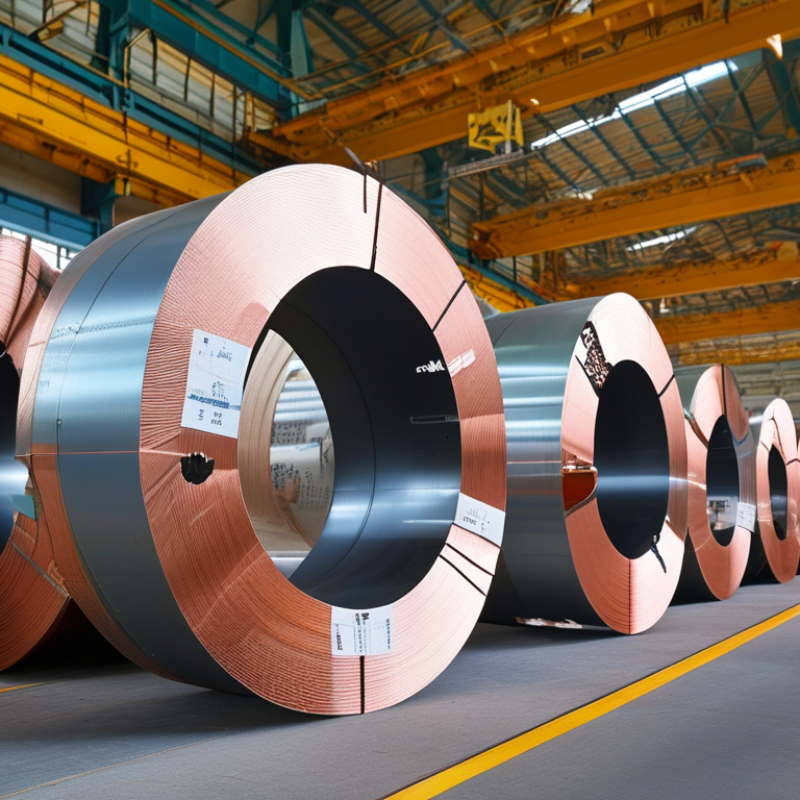
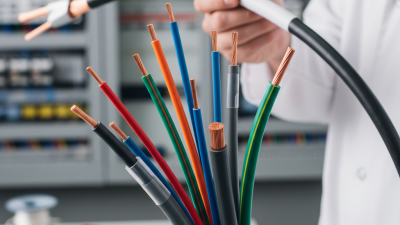
Power wires carry electrical current between equipment, panels, buildings, and distribution systems. A typical cable includes a conductive core, insulation, and an outer protective layer. Copper offers excellent conductivity, while aluminum can reduce weight and material cost. The correct choice depends on voltage, current, temperature, installation method, and expected service life.
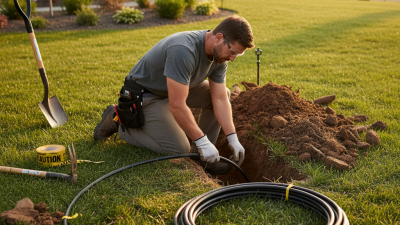
A wire installed inside a dry control cabinet faces different risks from one buried underground. Outdoor cables may need resistance to moisture, sunlight, abrasion, and temperature changes. Flexible equipment cables also require suitable bending performance. Small details matter. A conductor that feels stiff may complicate installation. Thin insulation may reduce space, but it can provide less mechanical protection.
Manufacturer selection affects more than purchase price. Reliable producers should provide clear technical datasheets, batch identification, test records, and traceable raw-material information. Their quality systems should cover conductor resistance, insulation thickness, voltage testing, and dimensional checks. Independent certifications can support confidence, but they should not replace practical verification. Samples still need review.
Ask for production evidence.
Factory audits can reveal storage problems, unclear labeling, or inconsistent process control. A supplier may offer an attractive quotation yet lack stable testing capacity. That risk can appear months later through overheating, cracking, or difficult warranty claims. No checklist is perfect. Buyers should compare samples, factory records, delivery history, and technical support before approving a power wire manufacturer for global projects.
| No. | Power Wire or Cable Type | Typical Conductor | Insulation or Sheath | Common Voltage Class | Relevant International Reference | Typical Application | Key Manufacturer Selection Check |
|---|---|---|---|---|---|---|---|
| 1 | Building Wire | Solid or stranded copper; aluminum may be used for larger sizes | PVC insulation | Up to 450/750 V | IEC 60227 | Residential, commercial and light industrial wiring | Confirm conductor class, insulation thickness, flame performance and applicable national approvals |
| 2 | Flexible Rubber-Insulated Wire | Flexible stranded copper | Rubber or elastomeric insulation and sheath | Up to 450/750 V | IEC 60245 | Portable equipment, construction tools and industrial connections | Check bending-cycle performance, oil resistance, temperature range and cable flexibility |
| 3 | Low-Voltage Power Cable | Stranded copper or aluminum | XLPE or PVC insulation with PVC or low-smoke sheath | Up to 1 kV or 3 kV, depending on design | IEC 60502-1 | Industrial plants, commercial buildings and distribution systems | Verify current capacity, short-circuit rating, conductor resistance and routine test records |
| 4 | Armored Power Cable | Copper or aluminum | XLPE or PVC insulation with metallic armor and protective sheath | Typically low voltage; medium-voltage designs are also available | IEC 60502 series; installation requirements may also follow IEC 60364 | Direct burial, outdoor routes, factories and infrastructure projects | Check armor material, mechanical protection, bending radius, corrosion resistance and grounding design |
| 5 | Medium-Voltage Power Cable | Stranded copper or aluminum with a compact circular construction | XLPE insulation, semiconductive screens and metallic screen | 6 kV to 30 kV classes | IEC 60502-2 | Utility distribution, renewable-energy plants and industrial substations | Require partial-discharge testing, insulation-screen quality, dimensional control and type-test evidence |
| 6 | High-Voltage Power Cable | High-purity stranded copper or aluminum | XLPE insulation with carefully controlled semiconductive screens | Above 30 kV to 150 kV class | IEC 60840 | Transmission links, substations and large power-generation projects | Evaluate factory testing, installation supervision, jointing support and long-term quality control |
| 7 | Extra-High-Voltage Cable | Copper or aluminum conductor engineered for high current and thermal performance | XLPE insulation system with metallic screen and protective sheath | Above 150 kV to 500 kV class | IEC 62067 | Major transmission corridors and high-capacity grid connections | Select manufacturers with proven type-test capability, strict process traceability and project engineering support |
| 8 | Fire-Resistant Power Wire | Copper, commonly with a mineral or fire-resistant insulation system | Mineral insulation, mica-based layers or other tested fire-resistant materials | Depends on the construction and project specification | IEC 60331 for circuit-integrity fire tests | Emergency lighting, fire pumps, alarm systems and safety-critical circuits | Confirm fire-duration rating, circuit-integrity test method, installation accessories and approval documentation |
| 9 | Low-Smoke Zero-Halogen Power Cable | Copper or aluminum | Halogen-free thermoplastic or thermoset insulation and sheath | Commonly used in low-voltage and selected medium-voltage systems | IEC 60754 and IEC 61034; flame tests may follow IEC 60332 | Transport hubs, hospitals, data centers and occupied public buildings | Verify halogen-gas acidity, smoke-density results, flame propagation performance and material consistency |
| 10 | Renewable-Energy Power Cable | Tinned or bare copper; aluminum may be used for selected fixed installations | UV-resistant, weather-resistant and often cross-linked insulation or sheath | Varies by system; photovoltaic wiring is commonly rated up to 1.5 kV DC | IEC 62930 for photovoltaic cables; project standards may add further requirements | Solar farms, wind facilities, battery systems and grid interconnections | Check UV resistance, ozone resistance, temperature rating, DC performance, connector compatibility and service life |
Note: Voltage ratings, conductor sizes and construction details must be confirmed against the project specification, installation method, local regulations and the applicable edition of the referenced standard.