Top 10 Benefits of Using Braided Wire in Various Applications?

In the world of modern manufacturing and construction, "braided wire" has emerged as a vital component. Its unique structure offers superior strength and flexibility, making it suitable for diverse applications. This versatility is often underestimated, yet it plays a crucial role in various industries.

One significant advantage of braided wire is its resistance to wear and fatigue. This makes it ideal for scenarios where durability is essential. From the automotive sector to telecommunications, braided wire proves its worth in real-world situations. Many projects benefit from its ability to withstand harsh environments and heavy loads.

However, the choice of braided wire is not without its complexities. Selecting the right type can be challenging. It is essential to consider specific requirements for each application. A deeper understanding of its properties can lead to better decisions. Through this exploration, we can uncover the many benefits of braided wire, paving the way for improved outcomes in our projects.
Top 10 Benefits of Using Braided Wire in Various Applications?

Applications of Braided Wire in Electrical Wiring and Connectivity

Braided wire has unique advantages in electrical wiring and connectivity. Its flexibility allows for easier routing in tight spaces. This is crucial in complex installations where conventional wiring may struggle. The braided design also enhances durability. It can withstand bending and twisting without breaking. This results in fewer maintenance issues over time.

In electrical applications, braided wire offers superior conductivity. This is particularly important for high-frequency signals in communication devices. The increased surface area improves performance, but it may not be the best choice for all scenarios. In some cases, less expensive options offer sufficient conductivity. Additionally, the installation process can be time-consuming. Adequate training is required to ensure proper handling and connections.

Furthermore, braided wire can help with electromagnetic interference (EMI) shielding. This makes it ideal for sensitive electronic equipment. However, achieving complete shielding may be challenging. Installing braided wire properly is essential to maximize its benefits. Thinking critically about its application can lead to better decision-making. Overall, braided wire presents both benefits and challenges in electrical wiring.

Top 10 Benefits of Using Braided Wire in Various Applications

Benefit Description Applications
Flexibility Easily bends and conforms to different shapes, making it ideal for intricate designs. Electrical connectors, cable assemblies
Durability Resistant to wear and tear, providing long-lasting performance. Industrial machinery, aerospace components
Conductivity Excellent electrical conductivity minimizes energy loss. Electrical wiring, communication lines
Resistance to Fatigue Withstands repeated bending and flexing without breaking. Robotics, wearable technology
Corrosion Resistance Materials can be coated to prevent corrosion, extending lifespan in harsh environments. Marine applications, outdoor installations
Lightweight Significantly lighter than solid wires, easing installation and reducing load. Aerospace, portable devices
Enhanced Signal Quality Minimizes signal degradation, particularly important in data transmission. Telecommunications, computer networks
Cost-Effectiveness Long-term savings due to durability and reduced maintenance needs. Construction, manufacturing sectors
Installation Ease Simplifies the wiring process, particularly in tight spaces. Electronics assembly, DIY projects
Versatility Can be used across various industries and applications for different needs. Automotive, medical devices

Durability and Strength: Advantages of Braided Wire Over Solid Wire

Top 10 Benefits of Using Braided Wire in Various Applications?

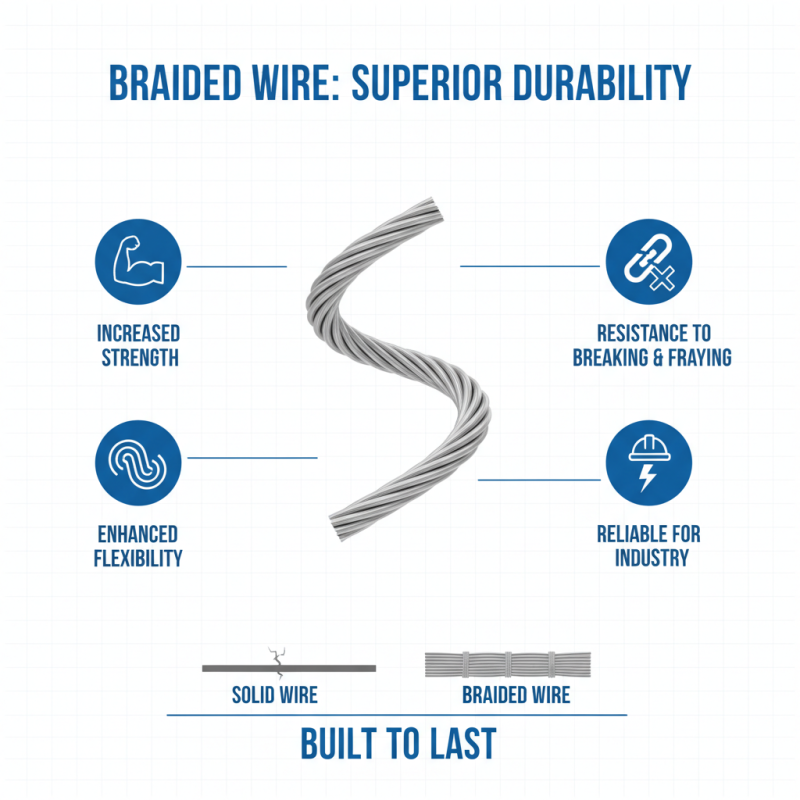
Braided wire offers remarkable durability and strength, making it superior to solid wire in many applications. Its structure consists of multiple strands woven together, which enhances flexibility while maintaining integrity under stress. This unique design allows braided wire to endure harsher conditions without easily breaking or fraying. In industries like construction and electrical work, the need for reliable materials is critical. Braided wire meets these demands through its robustness.

Moreover, braided wire is often lighter than solid wire, which can be advantageous in various settings. Weight reduction can lead to easier handling and installation. However, some may find the versatility of braided wire daunting. It's not always clear which type to use for specific tasks. Users must consider factors like load, environment, and intended use. Understanding these elements is crucial in maximizing the advantages braided wire offers. While its benefits are considerable, choosing the right application can be challenging. Thus, users must reflect on their needs carefully.

Flexibility and Versatility: Adapting Braided Wire to Different Uses

Top 10 Benefits of Using Braided Wire in Various Applications?

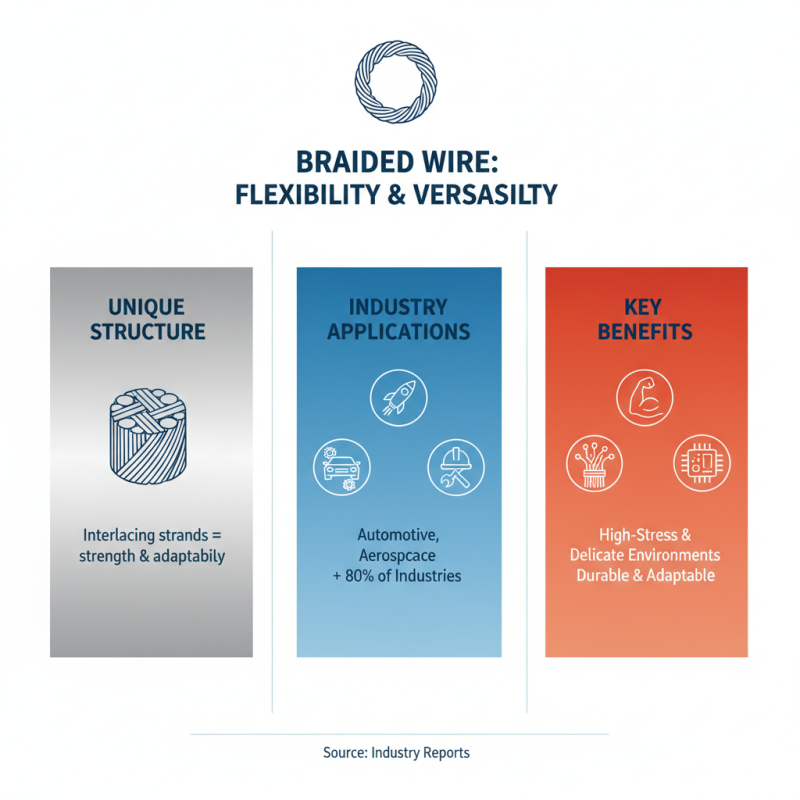
Braided wire offers remarkable flexibility and versatility across numerous applications. Its unique structure makes it suitable for various industries, including automotive, aerospace, and construction. In fact, studies show that more than 80% of industries utilize braided wire in some capacity. The combination of strength and adaptability allows it to be used in both high-stress and delicate environments.

In automotive applications, braided wire is often used in electrical systems. It can withstand vibration and prevents breakage. The wire’s ability to flex without losing structural integrity is a game-changer. Similarly, in aerospace, its lightweight characteristics help reduce overall aircraft weight, improving fuel efficiency. A report from the Aerospace Industries Association highlights a 5% increase in efficiency through the use of advanced materials like braided wire.

However, flexibility can lead to challenges. Some users may find that their braided wire isn’t ideal for static applications. Over time, it can lose shape if not properly managed. Additionally, not all braided wires are created equal. Selecting the right type for specific tasks requires careful consideration of material, weave, and intended use. Despite these nuances, the continued developments in braided wire technology promise even more innovative uses in the future.

Cost-Effectiveness: Economic Benefits of Using Braided Wire

Braided wire offers significant cost-effectiveness across various applications. Its durability reduces the need for frequent replacements. This means fewer expenses in the long run. Businesses can allocate funds to other critical areas. Less maintenance time also allows companies to boost productivity.

Using braided wire also minimizes production costs. Its versatile nature suits multiple industries, from automotive to construction. Savings accrue not just from lower material costs. The efficiency and simplified installation also contribute. However, it is essential to consider quality. Cheap options may lead to hidden costs over time.

Investing in high-quality braided wire can yield better results. While the initial expense might be higher, the long-term benefits are undeniable. Dedicating time to research can help identify the best options. Some may overlook this, yet it’s crucial for economic returns. Taking a closer look at braided wire options might reveal unforeseen advantages.

Top 10 Benefits of Using Braided Wire in Various Applications

This chart displays the top 10 benefits of using braided wire across various applications, highlighting their importance in the industry based on a score from 1 to 10. Each benefit contributes to the overall effectiveness and attractiveness of braided wire for different uses.

Enhanced Performance: Improved Signal Transmission with Braided Wire

Braided wire is becoming increasingly popular for various applications, particularly in improving signal transmission. Its unique structure allows for enhanced performance in many technical setups. The intertwining strands reduce electromagnetic interference, which is crucial for clear signal integrity. This is especially important in audio and video equipment, where even the smallest noise can impact quality.

In real-world applications, users have noticed a difference. For instance, in telecommunications, braided wire cables provide more reliable connections. They help in maintaining consistent signal strength over long distances. However, it’s also important to consider drawbacks, such as potential wear and tear in rugged environments. Not all braided wires are built to withstand harsh conditions, leading to possible failures.

Additionally, while braided wire can be beneficial, it’s not always the best choice. Sometimes, traditional wiring can outperform in certain low-frequency applications. It's key to assess each situation individually. Choosing the right type of wire should depend on specific needs and conditions. Understanding these factors can lead to better performance and reduced costs in the long run.