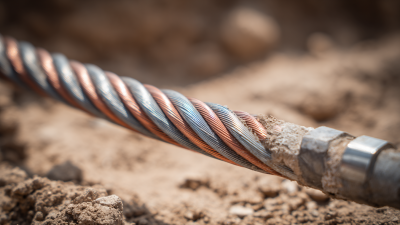
Choosing the right electric cable wire is rarely a simple purchasing decision. Global buyers must match cable construction with voltage, current, installation conditions, and local requirements. A cable suitable for an indoor control panel may fail in direct sunlight, wet soil, or heavy industrial equipment. Details matter.
This guide introduces common options, including building wire, flexible cable, armored cable, XLPE-insulated power cable, coaxial cable, and specialty control cable. Each type serves a different purpose. Copper offers excellent conductivity and easy termination. Aluminum can reduce weight and material cost, but it needs careful joint preparation. PVC insulation suits many standard installations, while XLPE often provides stronger thermal performance. These differences affect safety, service life, transport, and total project cost.
Reliable sourcing requires more than comparing prices. Buyers should review conductor size, insulation thickness, voltage rating, temperature range, bending radius, flame performance, and resistance to moisture or chemicals. Product datasheets, factory quality records, test reports, and certification marks deserve close attention. IEC, UL, and other standards may apply, depending on the destination and project specification. Requirements vary between markets.
Some catalog descriptions remain unclear. That is a weakness worth questioning. A low-priced cable can become expensive after difficult installation, premature replacement, or rejected inspections. Before ordering, confirm the cable’s intended use, length, packaging, labeling, and documentation with the manufacturer. Careful technical review supports safer installations and more predictable international procurement. No single cable is best for every application.
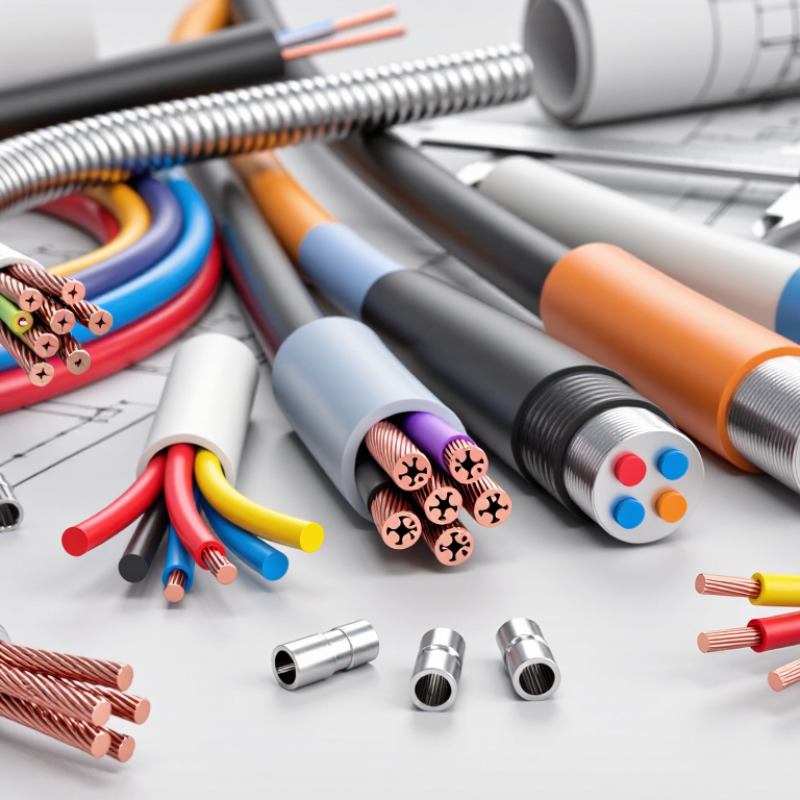
Top Types of Electric Cable Wire for Global Buyers
What Electric Cable Wire Is and How It Functions
Electric cable wire carries electrical energy between a power source and equipment. Its conductor is usually copper or aluminum. Copper offers excellent conductivity, while aluminum is lighter and often used for larger installations. The conductor may be solid or stranded. Solid wire stays firm, but stranded wire bends more easily.
Insulation surrounds the conductor and limits contact with people, metal, and nearby wires. Common insulation materials resist heat, moisture, abrasion, or chemicals. A protective outer sheath may add another barrier for outdoor or industrial use. Cable structure matters because a warm motor room demands different protection than a dry indoor wall.
When voltage reaches the conductor, electrons move through the metal and deliver power to a load. The wire size controls how much current it can carry safely. A cable that is too small may overheat, even when the equipment appears to work normally. That mistake is easy to miss.
Buyers should check voltage rating, current capacity, temperature range, flexibility, installation location, and local electrical requirements. Solid wires suit fixed routes, while flexible cables support moving tools and machinery. Moisture-resistant designs are better for exposed areas. A field inspection should also examine damaged insulation, loose terminals, and sharp bends. Cable selection is not only a product choice; it is a safety decision that deserves careful verification.
| Electric Cable Wire Type | Typical Conductor | Common Insulation or Construction | Typical Voltage Range | Typical Maximum Conductor Temperature | Main Functions | Common Applications | Key Advantages | Important Buying Considerations |
|---|---|---|---|---|---|---|---|---|
| PVC-Insulated Building Wire | Solid or stranded copper; aluminum is also used in selected installations | Thermoplastic PVC insulation, normally without an outer sheath for single-core wire | Commonly 300/500 V or 450/750 V, depending on the applicable standard | Typically 70°C for standard PVC insulation | Transmits electrical power inside buildings while the insulation prevents contact, leakage, and short circuits | Residential, commercial, and light-industrial fixed wiring; conduits; control panels | Cost-effective, easy to strip and terminate, widely available, and suitable for dry indoor environments | Verify conductor cross-sectional area, fire performance, flexibility, color coding, and local installation requirements |
| XLPE-Insulated Power Cable | Stranded copper or aluminum | Cross-linked polyethylene insulation with PVC, PE, or low-smoke outer sheath | Commonly 0.6/1 kV for low-voltage power distribution; higher ratings are available for medium-voltage systems | Typically 90°C in continuous operation | Carries high electrical loads while resisting heat and electrical stress | Industrial feeders, underground distribution, renewable-energy installations, and utility networks | Higher continuous operating temperature, good dielectric strength, low moisture absorption, and strong current capacity | Check short-circuit temperature rating, installation depth, bending radius, screen requirements, and soil thermal conditions |
| EPR-Insulated Power Cable | Stranded copper or aluminum | Ethylene propylene rubber insulation with a protective outer sheath | Commonly 0.6/1 kV and medium-voltage ratings such as 6/10 kV or 12/20 kV | Typically 90°C in continuous operation | Transfers power in systems exposed to heat, moisture, mechanical movement, or demanding electrical conditions | Industrial plants, mining, marine facilities, substations, and flexible medium-voltage connections | Excellent flexibility, moisture resistance, thermal stability, and resistance to partial discharge | Compare insulation thickness, screen design, oil and chemical resistance, and compatibility with termination kits |
| Rubber-Insulated Flexible Cable | Fine-stranded copper | Elastomer or rubber insulation with a durable rubber or elastomeric outer sheath | Commonly 300/500 V or 450/750 V; specialized products may have higher ratings | Typically 60°C to 90°C, depending on the elastomer formulation | Delivers power where the cable must bend, move, or withstand vibration | Portable tools, construction equipment, stage equipment, industrial machinery, and temporary power supplies | High flexibility, strong abrasion resistance, and better performance than ordinary PVC in cold or rough environments | Check oil resistance, cold-temperature flexibility, flexing cycle requirements, sheath durability, and permitted outdoor use |
| Armored Power Cable | Stranded copper or aluminum | XLPE or PVC insulation with metallic armor, bedding, and an outer sheath | Commonly 0.6/1 kV; medium-voltage versions are also widely used | Typically 90°C when XLPE insulated | Transmits power while providing mechanical protection against impact, compression, and rodent damage | Direct burial, industrial facilities, outdoor substations, tunnels, and infrastructure projects | High mechanical protection and suitability for exposed or underground installation | Confirm armor material, corrosion protection, earthing method, minimum bending radius, and cable-gland compatibility |
| Aerial Bundled Cable | Stranded aluminum phase conductors; an insulated or bare messenger may be included | Several insulated conductors twisted around a messenger or bundled together | Commonly up to 0.6/1 kV for low-voltage overhead distribution | Often approximately 90°C for XLPE-insulated conductors | Distributes electricity overhead while reducing accidental contact between separate conductors | Urban and rural low-voltage networks, service drops, and areas where poles are preferred to underground systems | Compact installation, improved public safety, reduced tree-clearance requirements, and fewer cross-arm components | Check messenger strength, span length, wind and ice loading, insulation UV resistance, and compatible suspension hardware |
| Bare Overhead Conductor | Hard-drawn aluminum, aluminum alloy, copper, or aluminum reinforced with a steel core | No electrical insulation; relies on air clearance and support hardware | System voltage varies widely, from distribution levels to high-voltage transmission | Depends on conductor material, construction, and allowable sag; operating limits are project-specific | Transfers electrical power over long distances with air acting as the primary insulation medium | Overhead distribution lines, transmission networks, substation connections, and grounding systems | Low weight per unit length, efficient heat dissipation, and cost-effective long-span installation | Evaluate ampacity, sag-tension performance, corrosion exposure, fault-current withstand, and statutory clearance requirements |
| Mineral-Insulated Cable | Usually copper conductors | Solid mineral insulation, commonly magnesium oxide, enclosed in a metal sheath | Commonly used at low-voltage ratings such as 500 V or 750 V, depending on construction and certification | Can withstand very high temperatures; the allowable value depends on the complete cable system and termination | Maintains circuit continuity in fire or high-temperature conditions while resisting moisture and electromagnetic interference | Fire alarms, emergency circuits, industrial furnaces, tunnels, high-rise buildings, and critical safety systems | Excellent fire resistance, non-combustibility, compact dimensions, and low smoke generation | Check termination quality, bending technique, corrosion protection, moisture sealing, and fire-resistance certification |
| Coaxial Cable | Usually a solid or stranded copper center conductor | Dielectric insulation, metallic shield, and protective outer jacket arranged concentrically | Specified mainly by signal frequency and impedance rather than power voltage; common impedance values are 50 Ω and 75 Ω | Varies by dielectric and jacket material; many general-purpose designs operate around 70°C to 85°C | Carries radio-frequency signals while the shield limits electromagnetic interference and signal loss | Antennas, radio systems, video distribution, measurement equipment, and communication infrastructure | Good shielding, controlled impedance, and reliable transmission over defined frequency ranges | Compare impedance, attenuation, shielding coverage, frequency range, connector type, bend radius, and outdoor weather resistance |
| Shielded Twisted-Pair Data Cable | Solid or stranded copper pairs twisted to reduce crosstalk | Individual pair insulation with an overall foil, braid, or combination shield and outer jacket | Low-voltage signal cable; performance is normally classified by data category and frequency rather than power voltage | Often rated around 60°C to 75°C, depending on jacket and installation type | Transmits balanced digital signals while reducing electromagnetic interference and pair-to-pair crosstalk | Industrial Ethernet, building automation, process control, security systems, and data networks | Reliable high-speed communication, improved noise immunity, and support for long structured-cabling links | Check conductor gauge, shielding arrangement, transmission category, impedance, termination hardware, and separation from power cables |
Note: Ratings and performance values are typical industry ranges for general comparison. Actual values depend on conductor size, insulation compound, installation method, ambient temperature, national regulations, and the applicable IEC, regional, or project-specific standard.