Global buyers are entering 2026 with a practical question: which silicone wire type truly fits the application? The answer depends on more than color, price, or a familiar product name. A wire used inside a 180°C motor needs different insulation than one installed in a flexible sensor cable. Voltage, conductor material, strand count, bend radius, fire behavior, and chemical exposure all matter.
Polymer scientist Dr. James E. Mark emphasized a valuable principle: “Polymer performance depends on structure, processing, and end use.” That reminder applies directly to silicone wire selection. A finely stranded tinned-copper design may suit robotic movement. A high-temperature fiberglass-braided version may perform better near heaters. Medical equipment can require cleaner surfaces and tighter traceability. Outdoor assemblies may need stronger resistance to moisture, ozone, and sunlight.
The best choice is rarely the cheapest reel.
This guide compares silicone wire types for international purchasing teams, engineers, distributors, and OEM buyers. It considers insulation grades, conductor constructions, temperature ratings, voltage classes, flexibility, certification evidence, and supplier consistency. It also examines details that are easy to overlook, such as jacket thickness, stripped-end quality, spool labeling, and batch documentation.
Some recommendations will remain conditional. That is intentional. A specification sheet cannot predict every installation mistake. Even an excellent silicone wire can fail when bent beyond its radius, exposed to incompatible chemicals, or terminated poorly. Buyers should verify samples, test finished assemblies, and request current technical documents before approving volume orders.
Silicone wire combines a conductive core with flexible silicone insulation. Most industrial versions use stranded copper, often tin-plated for better corrosion resistance. The strands bend repeatedly without cracking easily. Silicone rubber remains flexible across roughly -60°C to 200°C, depending on formulation and testing method. That range suits ovens, lighting systems, battery packs, and moving equipment.
Wire structure matters more than appearance. A fine-stranded core improves flexibility, while thicker insulation improves abrasion and dielectric protection. Some designs add fiberglass braiding for mechanical support and short-term heat exposure. IEC 60228 conductor classes help buyers compare resistance and strand construction. IEC 60216 evaluates insulation thermal endurance, not simply marketing temperature claims. Read the test conditions carefully.
The global wire and cable market reached about USD 216 billion in 2023, according to Grand View Research’s 2024 market report. Silicone wire remains a smaller specialty segment, but thermal and flexibility demands support its use. A practical selection should check conductor size, voltage rating, temperature rating, bend radius, and flame behavior. Do not judge quality by softness alone. I have seen soft insulation hide weak strands and poor crimp performance. That is an easy mistake. Procurement teams should request test reports, traceable specifications, and samples from actual production lots. Some suppliers provide impressive numbers, yet omit aging results or conductor resistance. That gap deserves attention.
2026 Best Silicone Wire Types for Global Buyers?
Silicone wire is not one universal product. Single-core hook-up wire suits compact control panels, battery packs, and laboratory equipment. Its soft insulation bends easily around tight corners. Multi-core silicone cable reduces installation time when several circuits share one jacket. Flexible stranded wire performs better under repeated movement, especially near hinges or small robotic joints. Braided silicone wire adds mechanical protection, but the braid can increase diameter and cost. Shielded versions help reduce electromagnetic interference in sensors and data-related circuits. They are not automatically better for simple power connections.
Temperature ratings require careful checking. Many silicone-insulated wires operate around -60°C to 180°C, but the conductor, terminal, and surrounding materials may limit real performance. IEC 60228 separates conductors into Classes 1, 2, 5, and 6. Classes 5 and 6 provide greater flexibility through finer strands. That detail matters during repeated bending. The IEA Electricity 2024 report expects global electricity demand to grow by about 4% annually through 2026. This supports wider demand for durable internal wiring in power and control equipment. However, market growth does not justify choosing the highest specification every time. I have seen buyers select high-temperature braided wire for stationary cabinets. It worked, but the extra protection was unnecessary. A better decision compares voltage, current, bend cycles, abrasion, temperature, and certification requirements. Always verify test reports and batch traceability. Datasheets can look precise. Field conditions are messier.
For global buyers, stranded silicone-insulated copper wire suits flexible control panels, battery connections, and compact equipment. Fine strands reduce bending stress, while tinned copper can improve corrosion resistance in humid storage conditions. Check conductor cross-sectional area, resistance per meter, rated voltage, and dielectric strength. Do not guess. A higher current rating may require larger conductors, shorter routes, or improved airflow. The insulation alone cannot prevent overheating.
Temperature changes everything. Many silicone compounds remain flexible below −50°C and tolerate continuous temperatures near 180°C, but the exact limit depends on formulation, wall thickness, and operating duration. Short exposure to higher heat does not equal continuous approval. Confirm thermal aging data and flame behavior from independent test reports. I would also compare cold-flex performance, because a wire that survives heat may become stiff after repeated winter movement.
Mechanical details often decide service life. Choose fine-strand construction for tight bends, but verify strand break resistance during repeated motion. Measure the route. Check minimum bend radius, tensile strength, abrasion resistance, and compatibility with oils or cleaning fluids. Fiberglass-braided silicone wire can add heat and abrasion protection, although it may be less flexible and harder to terminate. A perfect specification sheet is not enough. Sample testing under real load, vibration, and temperature cycles remains essential. Small oversights can become costly failures.
2026 Best Silicone Wire Types for Global Buyers?
Global Safety Standards, Certifications, and Market Requirements
Choosing silicone wire for international projects requires more than checking temperature ratings. Buyers should match conductor size, voltage rating, flexibility, and insulation performance with the final application. IEC 60228 helps define conductor classes, while IEC 60332 addresses flame propagation. For low-smoke or halogen-restricted environments, IEC 60754 and IEC 61034 may also matter.
Certification evidence must be specific to the wire construction. A test report should identify insulation material, conductor, gauge, temperature range, and production sample. Generic certificates can create problems during customs checks or technical audits. For North American markets, buyers may request appliance wiring material recognition or equivalent safety documentation. European projects may require RoHS and REACH compliance records, although these rules do not replace electrical safety testing.
Market requirements often differ by industry. Medical equipment, battery systems, lighting, and industrial controls may demand separate traceability and flame ratings. Confirm whether the product needs CE-related documentation within the complete equipment, rather than assuming the wire itself carries CE approval. A certificate alone is not enough.
I have seen procurement teams overlook bend radius and stripping behavior. That mistake appears later during assembly. Silicone insulation feels soft, but poor conductor selection can still cause heating or breakage. Ask for batch numbers, inspection records, and samples tested under real installation conditions. Some suppliers provide excellent documents, yet their production consistency needs closer review.
| Silicone Wire Type | Typical Construction | Typical Voltage Range | Typical Temperature Range | Main Advantages | Common Applications | Relevant Standards or Market Requirements | Buyer Documentation to Request | Global Buyer Suitability |
|---|---|---|---|---|---|---|---|---|
| Flexible Single-Core Silicone Hook-Up Wire | Fine-stranded copper conductor with silicone rubber insulation; commonly supplied in metric cross-sections or AWG sizes. | Typically 300/500 V or 600 V, depending on the tested construction. | Commonly approximately −60°C to +180°C; higher ratings require specific test evidence. | High flexibility, strong heat resistance, good low-temperature performance, and easy routing in compact assemblies. | Control panels, appliances, lighting equipment, heaters, motors, sensors, and internal equipment wiring. | IEC 60245-3 IEC 60245-1 IEC 60332-1-2 when specified RoHS / REACH market requirements | Full datasheet, conductor class, voltage rating, temperature rating, insulation thickness, flame test report, and batch traceability. | Very High |
| High-Temperature Silicone Hook-Up Wire | Single-core stranded copper wire with thicker silicone insulation for elevated-temperature equipment. | Typically 300/500 V, 600 V, or another value supported by the applicable approval. | Commonly 180°C; some constructions are rated around 200°C to 250°C after specific qualification. | Good thermal aging resistance and reliable flexibility near ovens, lamps, heating elements, and industrial equipment. | Ovens, furnaces, heating systems, thermal controllers, industrial machinery, and high-temperature appliances. | IEC 60245-3 IEC 60332-1-2 if required UL 758 AWM where applicable Regional electrical safety rules | Long-term temperature rating, short-term exposure limits, thermal aging results, dielectric withstand data, and approval file reference. | Very High |
| Ultra-Flexible Silicone Wire | Extra-fine-stranded, often tinned copper conductor with soft silicone insulation and a small bending radius. | Commonly 300 V to 600 V, depending on conductor size and construction. | Often approximately −60°C to +180°C. | Excellent bendability, vibration resistance, and suitability for repeated movement. | Robotics, test equipment, battery connections, laboratory instruments, portable devices, and moving assemblies. | IEC 60245-3 where construction applies UL 758 AWM where applicable RoHS / REACH | Stranding structure, conductor resistance, flex-life test method, minimum bend radius, pull-force data, and insulation adhesion results. | Very High |
| Fiberglass-Braided Silicone Wire | Silicone-insulated conductor with an outer fiberglass braid; may include a heat-resistant coating over the braid. | Often 300/500 V or 600 V; the braid alone does not determine the voltage rating. | Commonly approximately 180°C to 250°C, depending on the braid, coating, and complete cable construction. | Improved abrasion resistance and mechanical protection compared with unbraided silicone insulation. | Heating appliances, lighting fixtures, kiln wiring, high-temperature control systems, and industrial equipment. | IEC 60245-3 where applicable IEC 60332-1-2 if required Product-specific appliance requirements | Outer-braid material, temperature test method, abrasion results, dielectric test report, flammability evidence, and construction drawing. | High |
| Multi-Core Silicone Cable | Two or more insulated silicone cores with an overall silicone sheath; may include fillers, separators, or shielding. | Commonly 300/500 V; higher ratings require product-specific certification. | Often approximately −60°C to +180°C. | Reduced installation time, organized routing, good heat resistance, and protection of multiple circuits. | Industrial controls, instrumentation, appliances, medical equipment, laboratory systems, and automation. | IEC 60245-3 where applicable IEC 60245-1 IEC 60332-1-2 when required EU RoHS / REACH | Core identification method, cable diameter, bend radius, conductor resistance, insulation and sheath tests, and complete cable certification. | High |
| Shielded Silicone Instrumentation Cable | Silicone-insulated cores with foil, braid, or combined shielding and a silicone or compatible outer jacket. | Usually low-voltage or control-voltage service; commonly 300 V to 600 V, subject to design approval. | Often approximately −50°C to +180°C. | Improved electromagnetic compatibility and signal integrity in electrically noisy environments. | Temperature sensors, industrial automation, measurement systems, laboratory equipment, and motor control. | IEC 60245-3 where applicable EMC Directive 2014/30/EU for relevant equipment IEC 60332-1-2 if specified | Shield coverage, transfer impedance or shielding effectiveness, drain-wire details, grounding instructions, EMC test data, and cable capacitance. | High |
| High-Voltage Silicone Ignition or Electrode Cable | Silicone insulation designed for elevated impulse or working voltage; may use a fine-stranded or solid conductor. | Product-specific; commonly several kilovolts and sometimes higher. The exact rating must be stated on the test report. | Often approximately −60°C to +200°C, depending on the complete construction. | High dielectric strength, flexibility, corona resistance in suitable designs, and strong heat performance. | Ignition systems, gas appliances, burners, laboratory equipment, lighting systems, and high-voltage sensors. | Product-specific high-voltage tests IEC 60245 series where applicable Appliance safety requirements Regional certification rules | AC and impulse voltage test results, partial-discharge data where relevant, insulation thickness, leakage-current limits, and end-use safety assessment. | Medium to High |
| Silicone Battery and Power Cable | Large cross-section fine-stranded copper conductor with thick, flexible silicone insulation. | Commonly 600 V; higher system voltage requires a dedicated cable design and qualification. | Often approximately −50°C to +180°C. | Low installation force, high flexibility, good vibration resistance, and good performance in warm enclosures. | Energy storage systems, battery packs, power electronics, inverters, test benches, and mobile equipment. | IEC 60245-3 where applicable IEC 60332-1-2 if required RoHS / REACH End-use battery-system requirements | Current-carrying capacity, voltage drop, conductor resistance, short-circuit withstand, bend radius, flame test, and crimp-terminal compatibility. | Very High |
| Silicone Automotive Primary Wire | Fine-stranded copper conductor with silicone insulation designed for vehicle temperature, vibration, and chemical exposure. | Commonly 60 V or 600 V, depending on the vehicle circuit and applicable specification. | Commonly approximately −40°C to +180°C; engine-compartment requirements may be higher. | Flexible, heat-resistant, vibration-tolerant, and suitable for confined vehicle harnesses. | Automotive sensors, engine compartments, battery systems, motors, lighting, and specialty vehicle harnesses. | SAE J1128 where applicable ISO 19642 where applicable Automotive OEM or national requirements RoHS / REACH when applicable | Automotive specification, conductor size, temperature class, oil and fuel resistance, abrasion results, flex testing, and lot traceability. | High |
| Low-Smoke or Halogen-Free Silicone Cable | Silicone insulation and sheath selected and tested for reduced halogen-acid gas release and smoke performance. | Commonly 300/500 V or 600 V, depending on the complete cable design. | Typically approximately −50°C to +180°C. | Suitable for enclosed public, transport, and infrastructure environments where smoke and corrosive gas are controlled. | Rail interiors, public buildings, tunnels, data facilities, transport systems, and safety-critical installations. | IEC 60754-1 when claimed IEC 61034-2 when claimed IEC 60332 series as specified CPR requirements in applicable EU markets | Halogen-acid gas result, smoke-density result, flame-propagation result, CPR classification where applicable, and material declaration. | High for regulated projects |
| Silicone Flat Ribbon or Parallel Wire | Two or more parallel silicone-insulated conductors, often joined by a thin web for organized installation. | Usually low-voltage or control-voltage service; commonly 30 V to 300 V depending on design. | Often approximately −40°C to +180°C. | Compact profile, easy parallel routing, flexible installation, and efficient use of narrow spaces. | LED lighting, electronic equipment, display systems, sensors, and compact control assemblies. | UL 758 AWM where applicable IEC-based product requirements where applicable RoHS / REACH | Conductor spacing, polarity identification, peel force, insulation resistance, flame rating, bend performance, and end-use limitations. | Medium to High |
| Important purchasing note: Temperature, voltage, current capacity, flame performance, and certification are properties of the complete tested construction—not silicone material alone. For international procurement, buyers should verify the destination-market requirements, exact conductor size, insulation thickness, approval scope, test laboratory reports, production traceability, and whether the certification applies to the intended end use. IEC 60245-3, UL 758 AWM, SAE J1128, ISO 19642, IEC 60332, IEC 60754, and IEC 61034 are not interchangeable; the applicable standard depends on the wire design and application. | ||||||||
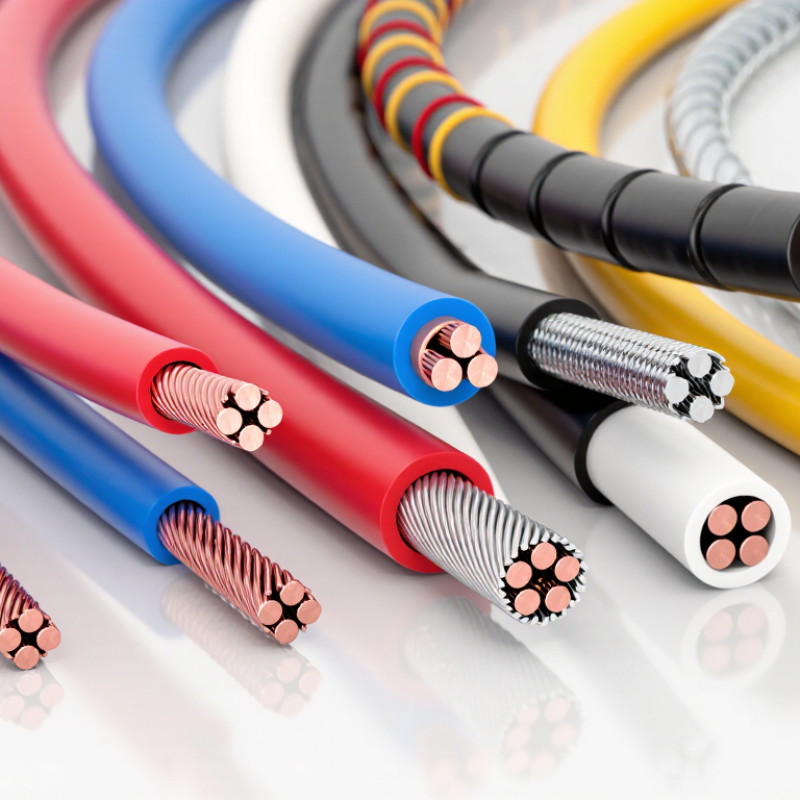
Selecting silicone wire starts with the application, not the color or advertised temperature rating. Flexible stranded wire suits robotic arms, test equipment, and moving panels. Solid or lightly stranded conductors work better in fixed installations. Measure the expected current, voltage, bend radius, and ambient heat before choosing the conductor size.
High-temperature silicone insulation handles heat well, but it is not automatically suitable for every environment. In a compact battery enclosure, check abrasion resistance, oil exposure, and terminal compatibility. For sensors, fine-strand wire can reduce installation stress. For heaters, a larger conductor may limit voltage drop and unwanted heat. Leave enough length for service loops.
My early wire selections focused too heavily on temperature. That was a mistake. A cable can remain flexible near a heat source yet fail after repeated bending. Request samples and test them through realistic cycles, including pulling, twisting, and prolonged heating. Review conductor material, insulation thickness, voltage rating, flame behavior, and batch consistency. Global buyers should also compare metric and American wire sizes, packaging labels, inspection records, and technical datasheets. Some suppliers provide impressive numbers, but the details may be incomplete. Ask for written tolerances and verify them before placing a large order.
At Radix, we do more than sell products; we provide solutions. We take the time to learn about each customer and your unique challenges, and then our knowledgeable team of problem solvers works to educate you on the possibilities to improve your products or operations.
From cutting-edge technology applications to extreme industrial environments, we’re here to collaborate, innovate, and elevate your success. Let’s connect.