Choosing high heat wire for global sourcing requires more than reading the temperature printed on a datasheet. MarketsandMarkets estimates that the global high-temperature cable market could grow from approximately USD 2.3 billion in 2023 to USD 3.7 billion by 2028. This growth reflects demand from aerospace, electric vehicles, industrial equipment, and energy systems. Yet market growth does not make every supplier reliable.
The real test begins with the application. Picture a wire routed beside a motor housing, exposed to vibration, oil mist, and repeated heating cycles. Silicone, PTFE, PFA, mica, and fiberglass constructions behave differently under those conditions. Check continuous temperature, short-term exposure, voltage rating, flex life, insulation thickness, flame performance, and chemical resistance. UL Solutions and IEC standards can support evaluation, but certification must match the finished cable design, not merely the raw material.
As cable engineer and author John C. Lienau observed, “Temperature rating alone does not define cable life; the surrounding environment matters.” That point is easy to overlook. Supplier audits should examine traceability, batch testing, conductor quality, and production consistency. Ask for test reports, certificates, and samples before placing a large order. A lower price may reflect thinner insulation or weaker process control. Sometimes, it does not. That uncertainty deserves investigation. Global sourcing works best when engineering evidence, factory experience, and independent verification guide the final high heat wire decision.
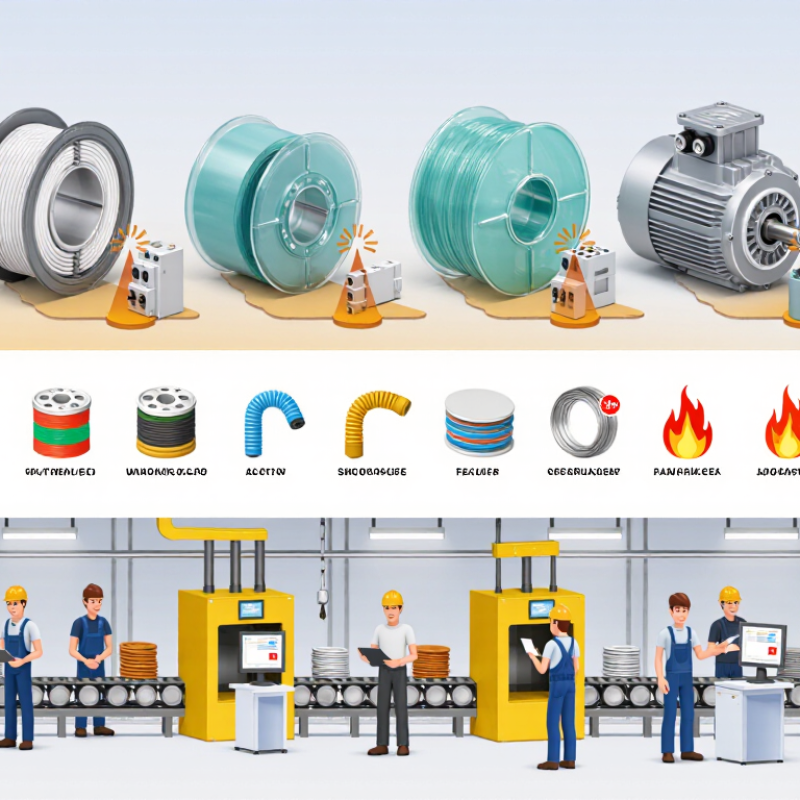
High heat wire is an electrical conductor designed to operate safely above ordinary appliance-wire temperatures. Its insulation may use PTFE, PFA, silicone rubber, or fiberglass with protective coating. In sourcing, “high heat” should never remain a vague sales phrase. Ask for the continuous temperature rating, voltage rating, conductor material, insulation thickness, and flexibility data.
IEC 60216 evaluates thermal endurance by measuring insulation life under controlled aging conditions. This matters because a wire rated at 200°C may still fail when exposed to vibration, oil, moisture, or repeated bending. UL 758 also addresses appliance wiring materials, including construction, flammability, and electrical performance. These standards provide a stronger basis than a simple temperature label.
Demand is becoming more practical. The International Energy Agency’s Global EV Outlook 2024 reported nearly 14 million electric car sales in 2023. Battery systems, charging equipment, and compact power electronics all require reliable heat-resistant wiring near motors and power modules. During supplier audits, inspect sample reels, test certificates, and batch traceability. Confirm whether the rating is continuous or short-term. That distinction is easy to miss. I would also request bend tests after heat aging, because a wire can pass a fresh sample test yet become stiff and cracked in service. Temperature alone is not enough.
| Evaluation Dimension | What It Defines | Typical Technical Data | Why It Matters for Global Sourcing | Recommended Verification |
|---|---|---|---|---|
| Product Definition | An electrical wire designed to maintain insulation performance and mechanical reliability at temperatures above those normally supported by general-purpose PVC wire. | Common high-temperature insulation families include silicone rubber, fluoropolymers, fiberglass braid, mica, and combinations of these materials. | “High heat” is not a single standardized temperature class. The insulation system, conductor, construction, and application environment must all be specified. | Request the complete construction drawing, insulation material, temperature rating, voltage rating, and applicable test reports. |
| Conductor Material | The conductive metal used to carry current. | Annealed copper is common for flexible power wiring. Tinned copper improves solderability and resistance to surface oxidation. Nickel-plated copper is used for higher-temperature applications. | Conductor plating can affect maximum operating temperature, termination reliability, corrosion resistance, and cost. | Check conductor material, plating type, strand construction, cross-sectional area, and resistance per unit length. |
| Conductor Size | The electrical and physical size of the conductor. | Common specifications use mm² or AWG. Typical high-temperature wire sizes range from approximately 0.14 mm² to 10 mm², depending on the application. | A smaller conductor may overheat under the same load, while an oversized conductor can increase cost, weight, and installation difficulty. | Verify nominal area, allowable tolerance, DC resistance, strand count, and ampacity under the intended installation conditions. |
| Temperature Rating | The maximum continuous conductor or insulation operating temperature stated by the applicable construction standard. | Typical insulation classes include 150°C, 180°C, 200°C, 250°C, and 260°C. Some specialized constructions are rated higher for limited applications. | The rating must match the actual ambient temperature, conductor temperature, bending conditions, and exposure to chemicals or moisture. | Confirm whether the rating is continuous or intermittent and review thermal-aging, overload, and flexibility test requirements. |
| Insulation Material | The primary dielectric layer surrounding the conductor. | Silicone rubber generally provides high flexibility and thermal resistance. PTFE and other fluoropolymers offer strong chemical resistance and low friction. Fiberglass braid provides heat resistance but may require an additional coating or protective jacket. | Material selection determines flexibility, abrasion resistance, dielectric strength, chemical compatibility, and processing requirements. | Review the insulation compound, wall thickness, hardness, elongation, tensile strength, and compatibility with oils, solvents, refrigerants, or cleaning agents. |
| Voltage Rating | The maximum rated voltage between the conductor and surrounding conductive parts under specified conditions. | Common low-voltage wire ratings include 300 V, 600 V, and 1,000 V, depending on the construction and standard. | A high temperature rating does not automatically mean a high voltage rating. Both requirements must be met independently. | Confirm the rated voltage, dielectric withstand test, insulation resistance, and clearance or spacing requirements. |
| Dielectric Strength | The ability of the insulation system to resist electrical breakdown. | A typical production test may apply an AC voltage for a specified time, while exact test levels depend on the product standard and rated voltage. | Thermal aging, cuts, pinholes, moisture, and excessive stripping can reduce dielectric performance. | Request routine high-voltage test results and confirm test voltage, duration, sample length, and acceptance criteria. |
| Flexibility and Minimum Bend Radius | The wire’s ability to bend without conductor breakage, insulation cracking, or permanent damage. | Minimum bend radius is commonly specified as a multiple of the finished outside diameter, often about 4× to 10× for flexible constructions, subject to the design. | Repeated bending, vibration, and tight routing can cause conductor fatigue or insulation damage even when the temperature rating is adequate. | Specify static or dynamic flexing, bend radius, number of cycles, travel distance, and operating temperature during the test. |
| Abrasion and Mechanical Protection | Resistance to scraping, compression, cuts, vibration, and installation damage. | Fiberglass braid improves heat resistance and mechanical support; an outer jacket or sleeve may be required where abrasion or contamination is severe. | High-temperature insulation can be soft, brittle, thin, or easily damaged depending on the material and construction. | Evaluate abrasion resistance, cut-through performance, jacket thickness, braid coverage, and the need for conduit or protective sleeving. |
| Flame and Fire Performance | The behavior of the wire when exposed to flame or elevated heat. | Requirements may include vertical flame, horizontal flame, glow-wire, smoke, or flame-propagation tests, depending on the end-use market. | Fire requirements differ across appliances, industrial equipment, transportation, and building installations. | Identify the destination-market standard and obtain a test report for the exact wire construction rather than a similar product family. |
| Chemical and Environmental Resistance | Resistance to oils, fuels, solvents, water, humidity, ozone, UV exposure, and other operating contaminants. | Fluoropolymers generally provide strong chemical resistance. Silicone performs well across a broad temperature range but may require protection from certain mechanical or chemical environments. | A wire can pass thermal tests yet fail prematurely because of fluid absorption, swelling, cracking, or loss of insulation strength. | List every expected chemical and exposure condition, then review immersion, humidity, ozone, UV, and thermal-aging test data. |
| Outside Diameter and Tolerance | The finished diameter and dimensional consistency of the wire. | The final diameter depends on conductor size, insulation wall, braid, jacket, and manufacturing tolerance. | Diameter affects terminal fit, cable-gland selection, harness density, bend radius, shipping volume, and automated processing. | Specify nominal diameter, maximum diameter, ovality, insulation concentricity, and dimensional inspection frequency. |
| Color Coding and Identification | The method used to identify conductors and maintain wiring traceability. | Available options may include solid colors, stripes, printed legends, sequential meter marking, and lot identification. | Consistent identification reduces assembly errors and supports maintenance, inspection, and regulatory traceability. | Approve color references, print durability, marking spacing, minimum character height, and batch or length traceability. |
| Applicable Standards | The technical and safety framework used to evaluate the wire. | Depending on the market and application, relevant frameworks may include IEC 60228 for conductor classes, IEC 60332 for flame testing, IEC 60684 for flexible insulating sleeving, UL appliance-wire requirements, and national installation codes. | Standards are not interchangeable. A product accepted in one market may require additional evaluation in another. | Define the exact standard edition, wire type, required markings, certification scope, and destination-country compliance obligations. |
| Termination Compatibility | The suitability of the wire for crimping, soldering, screw terminals, or other connection methods. | Silicone and fluoropolymer insulation may require specific stripping tools. Plated conductors can improve soldering or high-temperature termination performance. | Incorrect stripping or crimping can damage insulation and reduce pull-out strength, current capacity, or dielectric safety. | Validate terminal compatibility, strip length, crimp height, pull force, solderability, and heat-shrink or sealing requirements. |
| Quality-Control Data | The evidence that each production lot meets the agreed specification. | Typical controls include conductor resistance, dimensional inspection, spark or dielectric testing, tensile and elongation tests, visual inspection, and marking verification. | Consistent lot data is essential when sourcing across borders or changing production batches. | Require a certificate of conformity, inspection plan, sample-retention policy, batch traceability, and corrective-action process. |
| Sourcing Specification Format | The minimum information needed to compare technically equivalent quotations. | Specify conductor size and material, insulation type, temperature rating, voltage rating, color, outside diameter, standard, packing length, tolerance, and required tests. | Clear specifications prevent suppliers from substituting a lower-cost construction that appears similar but has different performance limits. | Use a controlled technical datasheet and approve a reference sample before mass production or long-term purchasing. |