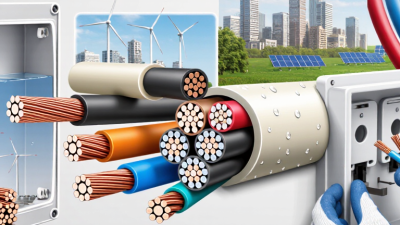
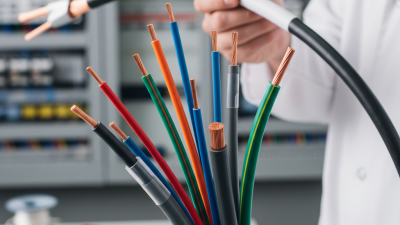
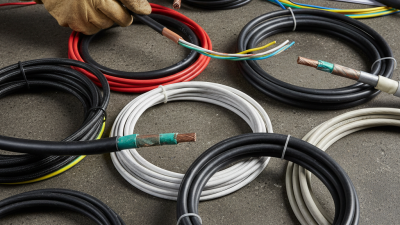
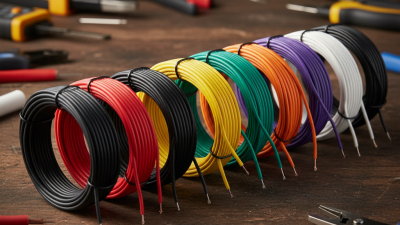
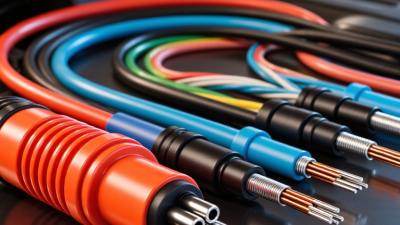
China has become a major production base for power wire, serving construction, energy, machinery, transport, and infrastructure projects worldwide. Yet identifying the top manufacturers requires more than checking export volume or factory size. Quality is visible in the details: bright copper strands, even insulation, clear meter markings, controlled twisting, and clean packaging.
Thomas Edison, a pioneer of the electrical industry, once said, “The value of an idea lies in the using of it.” His observation also suits power wire selection. A technically impressive product has little value if its conductor resistance, insulation thickness, or temperature rating fails in real service. Reliable manufacturers should provide test reports, traceability records, production data, and evidence of compliance with applicable standards.
This guide examines leading Chinese power wire manufacturers through practical criteria. These include material consistency, voltage performance, fire resistance, manufacturing capacity, delivery reliability, and after-sales support. Some factories excel in high-voltage cables, while others focus on building wire, flexible wire, solar cable, or industrial harnesses. The strongest supplier depends on the application.
Not every claim is equally convincing.
A polished website is not proof. Factory audits, sample testing, and documented quality controls matter more. Buyers should also question unusually low prices, because cheaper copper, thinner insulation, or weak testing can create hidden costs later. China’s power wire market is broad and capable, but it is not uniform. This comparison aims to separate established manufacturers from suppliers that only appear competitive on paper.
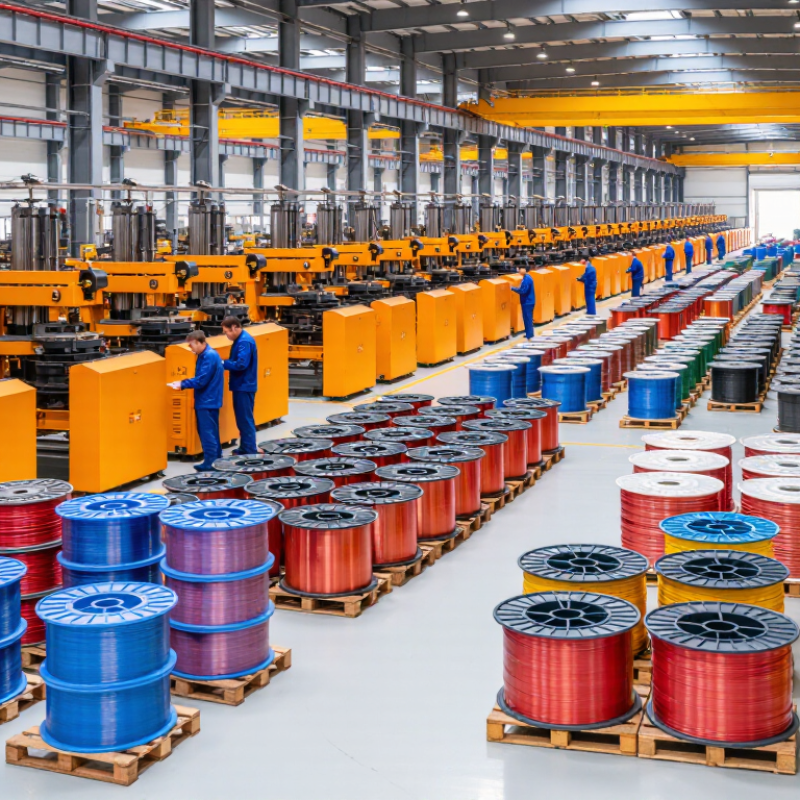
A power wire manufacturer designs, produces, tests, and supplies wires for electrical systems. In China’s electrical industry, these manufacturers connect raw materials with practical infrastructure needs. Their products may serve buildings, factories, transport systems, and renewable energy projects.
A reliable manufacturer controls conductor quality, insulation thickness, temperature resistance, and voltage performance. Copper or aluminum conductors must remain consistent throughout each production batch.
Factory experience matters during extrusion, stranding, and drum winding. Small defects can create heat, signal loss, or installation delays.
Testing should include dimensional checks, insulation resistance tests, flame performance, and electrical continuity. Clear batch records also improve traceability. However, no factory is perfect. Buyers should review failed samples, not only polished certificates. That uncomfortable detail often reveals real production discipline.
Tips:
Request a recent test report, inspect cable markings, and compare samples with the specification. Ask how the factory handles nonconforming products. Confirm production capacity before placing a large order.
A serious supplier explains limitations instead of promising everything. Auditing the facility can reveal storage problems, rushed packing, or inconsistent inspection routines.
These details may seem minor, but they affect field reliability.
Top manufacturers are not defined only by scale. They are defined by repeatable processes, qualified engineers, transparent communication, and evidence that their wires perform under demanding conditions.
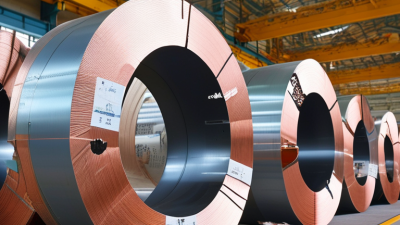
Comparing China’s leading power wire manufacturers requires more than checking price lists. In factory audits, I examine conductor material, insulation consistency, and process control records. Copper purity matters. A wire may look bright yet fail resistance tests. Ask for batch-specific test reports covering conductivity, voltage, flame performance, and dimensional tolerance. Independent laboratory verification adds useful distance from sales claims.
Production capacity should match your order, not merely appear impressive on paper. Review extrusion lines, aging ovens, spark testers, and final inspection stations. Photographs help, but live video audits reveal maintenance habits and operator discipline. Check whether the manufacturer can trace raw materials to finished coils. Traceability supports faster investigation when a shipment shows inconsistent insulation thickness. I would also compare sample approval procedures, packaging, delivery records, and communication during changes. Small delays often expose larger coordination problems.
Technical compliance is another dividing line. Confirm the wire’s intended voltage, temperature rating, conductor class, and installation environment. The supplier should explain applicable national or international standards in clear technical language. Do not accept a certificate without checking its scope, date, and issuing body. After-sales support deserves practical testing. Send detailed questions and measure response accuracy, not just response speed. No manufacturer is flawless. A credible partner acknowledges limitations, documents corrective action, and improves the process. My own comparisons can miss hidden subcontracting, so contract terms should require disclosure and inspection rights.
China’s leading power wire manufacturers are often distinguished by product specialization, not publicity. Large industrial producers commonly focus on low-voltage building wire, control cable, and flexible copper conductors. Their strengths include high-speed drawing lines, automated insulation equipment, and stable batch production. These factories usually serve residential projects, commercial buildings, and equipment makers.
Another group concentrates on medium- and high-voltage power cables. Their core capabilities include cross-linked insulation, metallic shielding, water-blocking layers, and strict dimensional control. These products support substations, renewable energy sites, rail systems, and industrial plants.
Experienced buyers should examine partial-discharge testing, conductor resistance, insulation thickness, and aging performance. A polished catalog is not enough.
Some Chinese manufacturers specialize in solar cable, wind-power cable, mining cable, or temperature-resistant industrial wire. They may offer smaller production volumes but stronger customization and faster engineering feedback.
During factory evaluations, sample traceability matters. So does the condition of storage areas. Copper can oxidize when handling practices are careless, although the finished cable may still look acceptable. This is where documentation sometimes needs more scrutiny.
A reliable supplier should provide test reports, process records, and clear compliance information for the target market. No producer is strongest in every category. Claims about “top” status deserve independent verification.
When evaluating power wire manufacturers in China, inspect evidence rather than relying on polished catalogs. Ask for current certificates, test reports, and factory addresses. ISO 9001 indicates a controlled quality system, but it does not prove every cable meets application requirements. Product compliance should match relevant IEC, GB, or other required standards. Check voltage ratings, conductor resistance, insulation thickness, flame performance, and temperature limits. Small differences can affect safety and service life.
Production capability deserves equal attention. A dependable factory should control copper or aluminum drawing, stranding, insulation extrusion, printing, and final winding. Ask whether each stage has documented inspections. Look for calibrated equipment, traceable batch numbers, and routine testing before shipment. An in-house laboratory with ISO/IEC 17025 competence adds confidence, although laboratory claims still require verification. Certifications may be valid but outdated. That is easy to miss. Factory audits, sample approvals, and independent witness testing provide stronger evidence than paperwork alone.
Tips: Request a recent sample and compare its measured conductor diameter with the specification. Confirm the certificate number through the issuing body. Review failed-test records when possible; transparent manufacturers should explain corrective actions. Check production capacity using actual line counts, shift schedules, and lead-time history. Be cautious with unusually low prices, vague material descriptions, or reports lacking serial numbers. I would also inspect packaging, because crushed reels and unclear labels often reveal weak process control. No assessment is perfect, but specific evidence reduces avoidable risk.
| Evaluation Area | Quality Standard or Requirement | Verifiable Data to Examine | Strong Manufacturer Benchmark | Recommended Evidence |
|---|---|---|---|---|
| Conductor Quality | IEC 60228 conductor classification | Conductor material, nominal cross-sectional area, DC resistance, and conductor class. | Uses annealed copper or aluminum conductors that comply with the specified IEC 60228 class and resistance limits. | Third-party test report, conductor resistance records, and material certificate. |
| Cable Construction | IEC 60502-1 for power cables with rated voltages from 1 kV to 3 kV, where applicable | Conductor, insulation, inner covering, armor, sheath, voltage rating, and cross-sectional design. | Provides a documented construction drawing and maintains consistent dimensions across production batches. | Technical datasheet, approved drawings, and type-test documentation. |
| Insulation Performance | Applicable thermoplastic or thermosetting insulation requirements | Insulation material, nominal thickness, minimum thickness, thermal rating, tensile strength, and elongation. | Uses clearly identified insulation compounds and controls extrusion thickness through in-line process monitoring. | Raw-material certificate, extrusion inspection record, and laboratory test results. |
| Fire and Flame Performance | Relevant IEC flame-retardance or smoke-performance requirements | Vertical flame behavior, smoke emission, halogen content, and flame-spread classification when specified. | Can supply standard PVC, low-smoke halogen-free, or other specified constructions with test evidence for the requested application. | Fire-performance report and material declaration. |
| Routine Testing | Routine tests specified by the applicable product standard | Conductor resistance, high-voltage withstand, insulation resistance, dimensional checks, and visual inspection. | Tests every finished production length or follows the exact sampling frequency required by the applicable standard. | Batch test report, calibration records, and traceable inspection logs. |
| Type Testing | Complete type-test program for the intended cable construction | Electrical, mechanical, thermal, aging, and environmental test results appropriate to the cable design. | Maintains current type-test reports from an accredited or technically qualified laboratory and controls design changes. | Full type-test report, laboratory accreditation details, and revision history. |
| Management System | ISO 9001 quality management system | Certificate scope, issuing certification body, validity period, manufacturing site, and audit status. | Certificate covers the actual cable-manufacturing facility and is valid for the products being purchased. | Valid certificate and latest surveillance or recertification record. |
| Environmental Management | ISO 14001 environmental management system | Control of energy use, waste, emissions, chemicals, and environmental compliance. | Uses documented environmental procedures and can provide compliance records for the relevant manufacturing site. | Valid certificate, environmental policy, and compliance documentation. |
| Occupational Safety | ISO 45001 occupational health and safety management system | Risk assessment, incident control, worker training, emergency planning, and site safety procedures. | Maintains a certified safety management system with records covering cable production and testing operations. | Valid certificate and recent audit documentation. |
| Production Scale | Demonstrated capacity for the required product mix | Number of conductor-drawing lines, bunching machines, insulation lines, cabling lines, sheathing lines, and testing stations. | Has sufficient dedicated equipment and documented capacity to meet the required monthly volume without compromising inspection frequency. | Factory audit, equipment list, production schedule, and capacity statement. |
| Voltage Range | Product range matched to the project voltage class | Available low-voltage and medium-voltage designs, conductor sizes, insulation systems, and applicable test standards. | Offers a clearly documented range rather than using one generic construction for different voltage applications. | Product catalog, design specifications, and project references with confidential details removed. |
| Process Control | Traceable manufacturing and inspection procedures | Raw-material batch identification, process parameters, operator checks, nonconformance handling, and final release approval. | Each finished cable length can be traced from conductor and compound batches through extrusion, testing, and shipment. | Sample traceability record and documented quality-control procedure. |
| Calibration | Control of measuring and test equipment | Calibration status of resistance bridges, high-voltage testers, dimensional gauges, tensile testers, and environmental chambers. | Uses equipment with valid calibration traceable to recognized national or international measurement standards. | Calibration certificates, equipment register, and overdue-calibration controls. |
| Material Compliance | Applicable restricted-substance and chemical requirements | Declarations for restricted substances, flame retardants, plasticizers, heavy metals, and halogen content where required. | Can provide material declarations for insulation, sheath, fillers, tapes, and other cable components. | Supplier declarations, laboratory screening report, and material safety documentation. |
| Export Readiness | Destination-market certification and documentation | Required approval marks, customs documentation, packaging specifications, language requirements, and destination standards. | Adapts the cable design and documentation to the importing market instead of relying only on domestic compliance. | Destination-specific certificate, packing list, certificate of origin, and conformity documents. |
| Packaging and Delivery | Protection of cable integrity during storage and transportation | Drum dimensions, cable length tolerance, end sealing, moisture protection, lifting instructions, and labeling. | Uses sealed cable ends, durable drums, clear batch labels, and documented handling procedures. | Packaging specification, drum inspection record, and shipment photographs. |
| Technical Support | Engineering support before and after order placement | Ability to review load requirements, installation conditions, bending radius, ambient temperature, fire performance, and applicable standards. | Provides signed technical submittals, responds to engineering queries, and supports inspection or corrective-action requests. | Technical response samples, submittal procedure, and service-level records. |
| Supplier Verification | Independent assessment of manufacturing capability | Factory audit results, corrective-action closure, production samples, laboratory access, and management review. | Accepts prequalification audits and provides transparent, site-specific evidence rather than generic corporate claims. | Completed audit report, corrective-action plan, and verification photographs. |
Choosing the right Chinese power wire manufacturer requires more than comparing prices. Start by matching the factory’s experience with your application, voltage range, conductor material, and installation environment. A reliable supplier should explain copper purity, insulation performance, temperature ratings, and applicable safety standards clearly.
Request recent test reports, production records, and sample lengths before placing a large order. Check whether the factory controls drawing, stranding, extrusion, and final inspection internally. During supplier audits, look for clean work areas, calibrated testing equipment, labeled materials, and traceable batches. These details often reveal more than a polished website. I once focused too heavily on a low quotation and overlooked inconsistent insulation thickness. That mistake delayed delivery.
Tips: Ask for samples from normal production, not specially prepared pieces. Confirm minimum order quantities, lead times, packaging, and replacement procedures in writing. A video audit can help, but an in-person visit provides stronger evidence. Keep communication practical. Ask how the supplier handles failed tests, design changes, and urgent orders. A manufacturer that admits limits may be more dependable than one promising everything. Also compare total cost, including testing, shipping, storage, and possible rework. Small savings can disappear quickly.
At Radix, we do more than sell products; we provide solutions. We take the time to learn about each customer and your unique challenges, and then our knowledgeable team of problem solvers works to educate you on the possibilities to improve your products or operations.
From cutting-edge technology applications to extreme industrial environments, we’re here to collaborate, innovate, and elevate your success. Let’s connect.